Thanksgiving travelers try to reach destinations, miss virus By DANIELLA PETERS Today. Click here.
Public health San Francisco Coronavirus pandemic Thanksgiving Holidays California
Americans, millions of whom traveled against the advice of public health officials, tried to stay safe before they hunkered down with their families for Thanksgiving, a holiday remade by the pandemic as case numbers and death tolls rise.
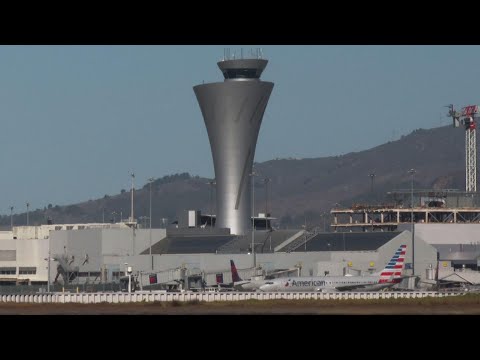
Lily Roberts, 19, said she got tested for COVID-19 at San Francisco International Airport before driving home to Marin County in Northern California.
“I’m not worried about it because I’m not at risk,” Roberts said. “However, I do follow the rules and the precautions because of my parents. That’s why I’m getting tested because I do not want to bring it into my home.”
Thanksgiving travel traditionally comes with highs and lows but it's even more fraught this year as travelers attempt to social distance while navigating crowds.
Lexi Cusano, 23, said Wednesday she encountered people standing too close in airport terminals, some not wearing masks or wearing them improperly, on her way from Miami to Hartford, Connecticut.
“It was just a little bit overwhelming and very shocking to me that people were just — you couldn’t move in a 6-foot radius without hitting someone or breathing in with a person next to you,” she said. “It was just a little bit crazy.”
She said travelers didn't act any safer on the plane.

“People were just hanging out without their masks on,” said Cusano, who recently took a job in Miami. “I saw them walking back and forth from the bathroom, down the aisles, with no mask on, and I was like, this is a little bit ridiculous now."
“You know, the main fear people have usually going on planes is: ‘Are we going to crash?’" she added. “But today, it was more like, ‘I’m breathing in the same air that’s been circulating in here and people are just being very irresponsible.' So that was the main horror.”
Things appeared a bit cramped to Juan Mojuta who flew Wednesday night to Wilmington, North Carolina, from Arizona.
“The first flight was very claustrophobic,” Mojuta told WWAY-TV. “A lot of people. Very gathered. But the second flight wasn’t as bad.”
More than 12.7 million Americans have been diagnosed with the virus since the pandemic’s start earlier this year and deaths have topped 262,200, according to Johns Hopkins University.
Data shows the seven-day rolling average for daily new cases in the U.S. rose over the past two weeks from 127,487 on Nov. 11 to 175,809 on Thursday. The seven-day rolling average for daily new deaths rose from 1,044 to 1,658 over that time.
Millions of Americans took to the skies and the highways ahead of Thanksgiving, despite warning and pleas from elected and health officials in a number of states to stay home and keep holiday gatherings smaller than usual.
Cusano said she got tested at Bradley International Airport in Connecticut after landing and was told to expect results in two to three days.
Regardless of her test results, she said she plans to quarantine in Connecticut for a month or two to make sure that, if she is infected during the holidays, she won’t infect anyone else. She works as a chief operating officer for a media company and can do the job remotely.
For most people, the new coronavirus causes mild or moderate symptoms, such as fever and cough that clear up in two to three weeks. For some — especially older adults and people with existing health problems — it can cause more severe illness, including pneumonia, and death.
__
Peters reported from Milwaukee. AP journalist Haven Daley contributed from San Francisco.


Comments
Post a Comment