Mixed city of Arabs and Jews remains on edge after violence By ILAN BEN ZION and DAVID GOLDMAN 2 hours ago
Mixed city of Arabs and Jews remains on edge after violence
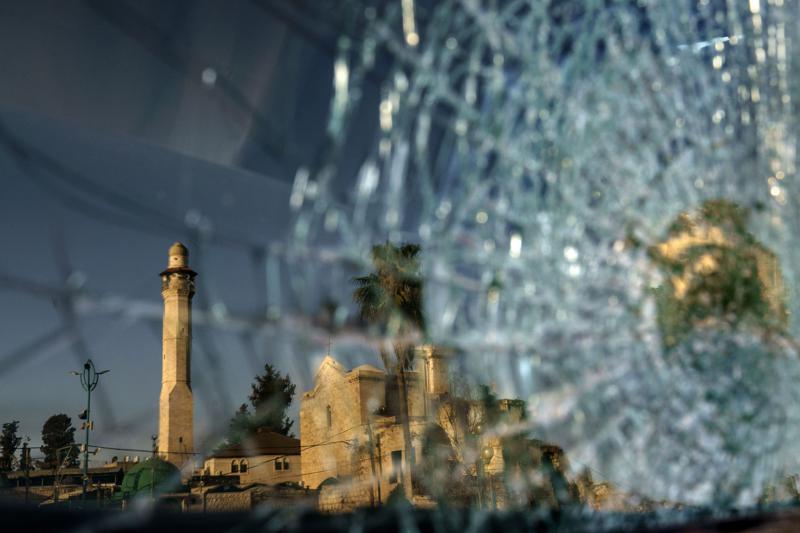
LOD, Israel (AP) — Israeli security forces guard the streets of Lod, weeks after rioters torched patrol cars, synagogues and homes. Attackers who killed an Arab and a Jewish resident are still at large. And a mayor whom some blame for setting the stage for some of the worst domestic unrest in Israeli history remains in office.
Israel and Hamas reached a truce two weeks ago to end 11 days of fighting in the Gaza Strip. But the roots of the upheavals that wracked Israel’s mixed Jewish-Arab cities during the war have not been addressed, leaving those communities on edge.
“It’s hard for me to say what tomorrow will be like. To say that I will have the same trust, it’s hard to say,” said Rivi Abramowitz, a Jewish resident of Lod’s predominantly Arab Ramat Eshkol neighborhood.
Lod, about 16 kilometers (10 miles) southeast of Tel Aviv, next to the main international airport, is home to 77,000 people. About a third are Arabs — many of them descendants of Palestinians who formed the majority of the city before a mass expulsion amid the 1948 war around Israel’s creation.
An urban landscape of low-rise housing projects from the 1950s and ’60s, the working-class city also is a bastion of hard-line Jewish politics. In the March 23 election, staunchly nationalist parties, including Prime Minister Benjamin Netanyahu’s Likud party, won more than 60% of the vote in Lod.
Any tensions were largely below the surface — until last month.
Clashes between Jerusalem police and Palestinian protesters in and near the Al-Aqsa Mosque, one of Islam’s holiest sites, and the planned eviction of Palestinians from homes in an east Jerusalem neighborhood drove some Arab residents of Lod into the streets in protest.
On the night that war began between Israel and Hamas, the shooting of an Arab man by a Jewish resident of Lod touched off over a week of violence, and the city was placed under a state of emergency.
Similar disturbances, fueled by longstanding Arab grievances over discrimination and lack of opportunities, quickly spread to other mixed areas across the country.
In Lod, two residents were killed: Musa Hassuna, 32, by a suspected Jewish gunman, and Yigal Yehoshua, 56, by a suspected group of Arab attackers. No charges have been filed in either case, and police say investigations are ongoing.
Some Arab residents point to the election of Mayor Yair Revivo eight years ago as a turning point. Revivo has close ties with a religious nationalist movement known as the “Torah Nucleus,” which promotes what it calls Jewish values in impoverished cities.
Critics say Revivo, a member of Likud, has incited hate against Arabs, advanced discriminatory policies and empowered the Torah Nucleus in harmful ways. The group’s presence in Lod goes back some 25 years, but its numbers have swelled from two founding families to over 1,000 families today.
Before the rioting, Revivo railed against “Arab crime” in his city, calling it an “existential threat to the state of Israel.”
“Jewish criminals have a drop of compassion. Arab criminals, you don’t understand, don’t have any inhibitions,” he told Radio 103 in December.
In April, he urged the government to launch a military-style operation to clamp down on the “nightmare of gunfire, explosions, fireworks and calls to prayer amplified abnormally at 4 a.m.”
In a letter to Israel’s police chief and public security minister, Revivo described “an atmosphere of terror, a Wild West” perpetrated by Arab residents.
Days before the May 10 riots, Revivo toured Lod with Itamar Ben Gvir, an ultranationalist lawmaker with anti-Arab views, outraging Arab residents.
Ruth Lewin-Chen of the Abraham Initiatives, a nonprofit group based in Lod that promotes coexistence, said its Arab population has grown increasingly frustrated.
She cited socioeconomic disparities between Jews and Arabs, violent crime and the absence of effective policing, planning and housing policies. She also pointed to the growing influence of the Torah Nucleus.
Many Arabs in Lod view the group with suspicion because of its ties with the West Bank settler movement. Some Arab residents refer to all of them collectively as “settlers.”
During the unrest, Arabs targeted property belonging to the religious nationalist community. In response, armed West Bank settlers and other ultranationalists mobilized to Lod, fanning the flames.
“We are observant from the religious Zionist community. I don’t see why we’re put into the rubric of ‘settlers,’” said Abramowitz, who has lived in Lod for six years with her husband, who was born in the town and whose parents were among the founders of the Torah Nucleus. “Nobody has come to throw out anybody.”
Arab politician Mohammed Abu Shikri said that in his decades on Lod’s city council, “I’ve never seen a mayor of a mixed city of Arabs and Jews who incites against Arabs, brings in settlers.”
“I’ve known eight Lod mayors,” he said. Until Revivo, “the mayors always had good relations with the Arabs.”
Arabs comprise about 20% of Israel’s population and are citizens with the right to vote. But they have long suffered from discrimination, and their communities are often plagued by crime, violence and poverty. They largely identify with the Palestinian cause, leading many Israelis to view them with suspicion.
A 2018 report by the Israel Democracy Institute noted disparities in Arab representation in mixed municipalities.
Although Arabs make up 30% of Lod’s population, only 14% of municipal employees are Arabs, with only four on the 19-member city council. The city hasn’t had an Arab deputy mayor in four decades, the report said.
“What does this say about the place of Arabs in the city?” asked Lewin-Chen. Lod lacks almost any facilities for “shared communal life,” she said, and city hall does little to bring Jews and Arabs together.
A rare exception seems to be the Maccabi Lod boxing club, where Jewish and Arab athletes trained together. “Here we are like family,” said coach Yaacov Wallach.
But signs of division are widespread. The town’s community center has separate exercise and music classes for Arabs and Jews.
In the tense Ramat Eshkol neighborhood, members of the Torah Nucleus community held a circumcision ceremony for a newborn on a recent morning. The next day, an Arab family celebrated the birth of their boy. Although the events were just a block apart, there were no signs of the communities celebrating together.
Abramowitz, for her part, says she has cordial relations with her Arab neighbors. But she believes there are limits to how far things can go, saying she wants to “live together, but separately.”
“There are after-school activities for Arabs, there are after-school activities for Jews,” she said. “We are not interested in mingling — assimilation.”
Revivo’s office declined interview requests. But it dismissed claims of discrimination, saying he has worked “to improve the quality of life in the Arab community the likes of which hasn’t been recalled since the founding of the city.” It added that “throughout the city, Jews and Arabs live as good neighbors.”
Samah Salaimeh, founder of Arab Women in the Center, a Lod-based advocacy group, said she’s optimistic the unrest will be a “wake-up call that we can’t continue this way.”
Malek Hassuna, the father of the Arab killed in the unrest, stood by his son’s grave, which sits beside those of several generations of the deeply rooted Lod family.
“If it’s Jew or Arab, it’s one blood,” he said, expressing hope his grandchildren will live peacefully with their Jewish neighbors. “I want Lod to go back to how it was 40 or 50 years ago, how it was with coexistence with Jews.”
- Get link
- X
- Other Apps


Comments
Post a Comment