CAVALCANTE, Brazil (AP) — Brazil’s vast size and deficient infrastructure make getting coronavirus vaccines to far-flung communities of Indigenous peoples and descendants of slaves a particularly daunting endeavor. Click here.


Brazil vaccine drive faces challenges in remote communities
yesterday

CAVALCANTE, Brazil (AP) — Brazil’s vast size and deficient infrastructure make getting coronavirus vaccines to far-flung communities of Indigenous peoples and descendants of slaves a particularly daunting endeavor.
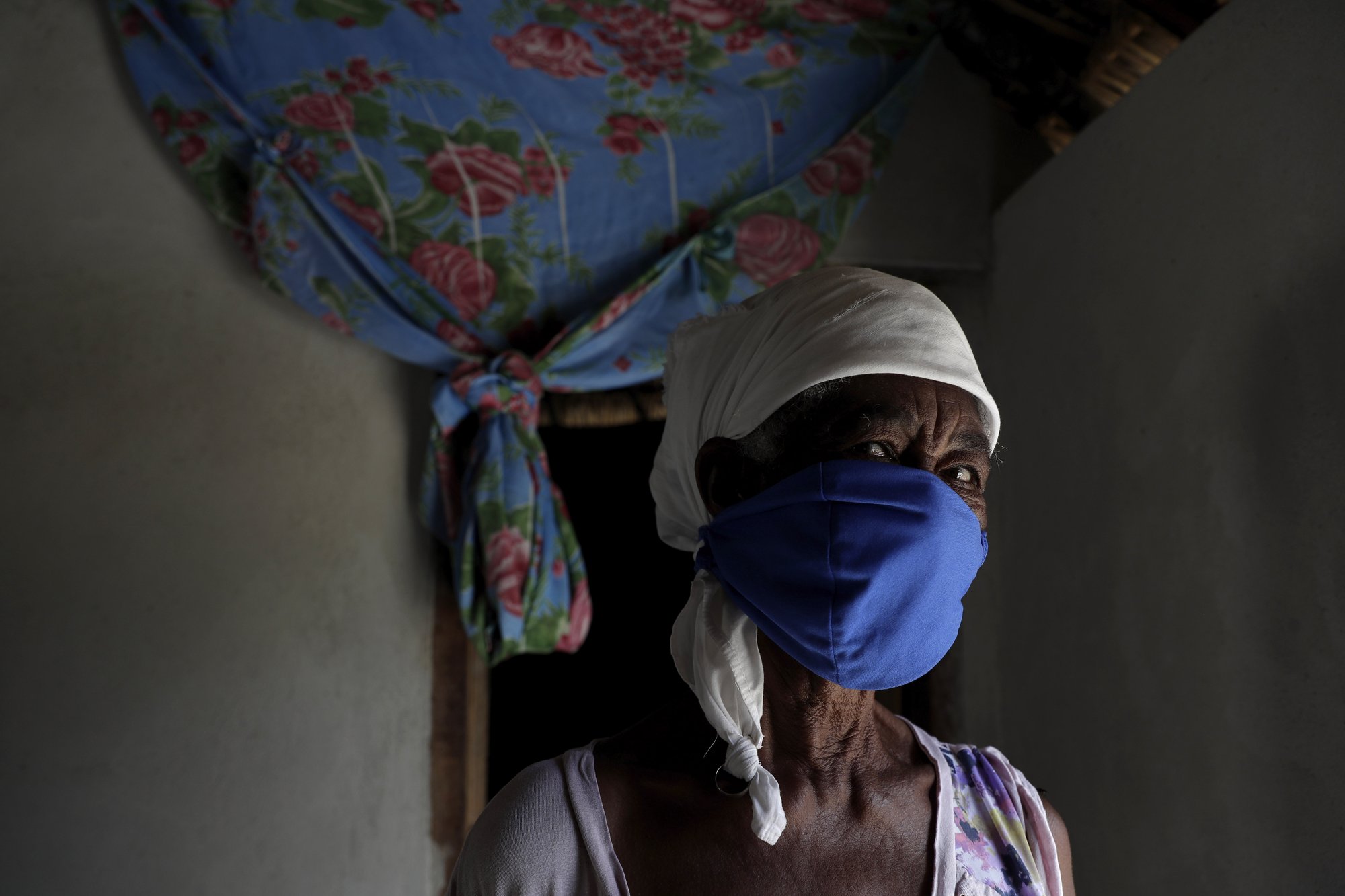
Bridiga dos Santos, 70, waits for her first shot of the Sinovac vaccine for COVID-19 during a house to house vaccination campaign in the Kalunga Vao de Almas quilombo on the outskirts of Cavalcante, Goias state, Brazil, Tuesday, March 16, 2021. (AP Photo/Eraldo Peres)
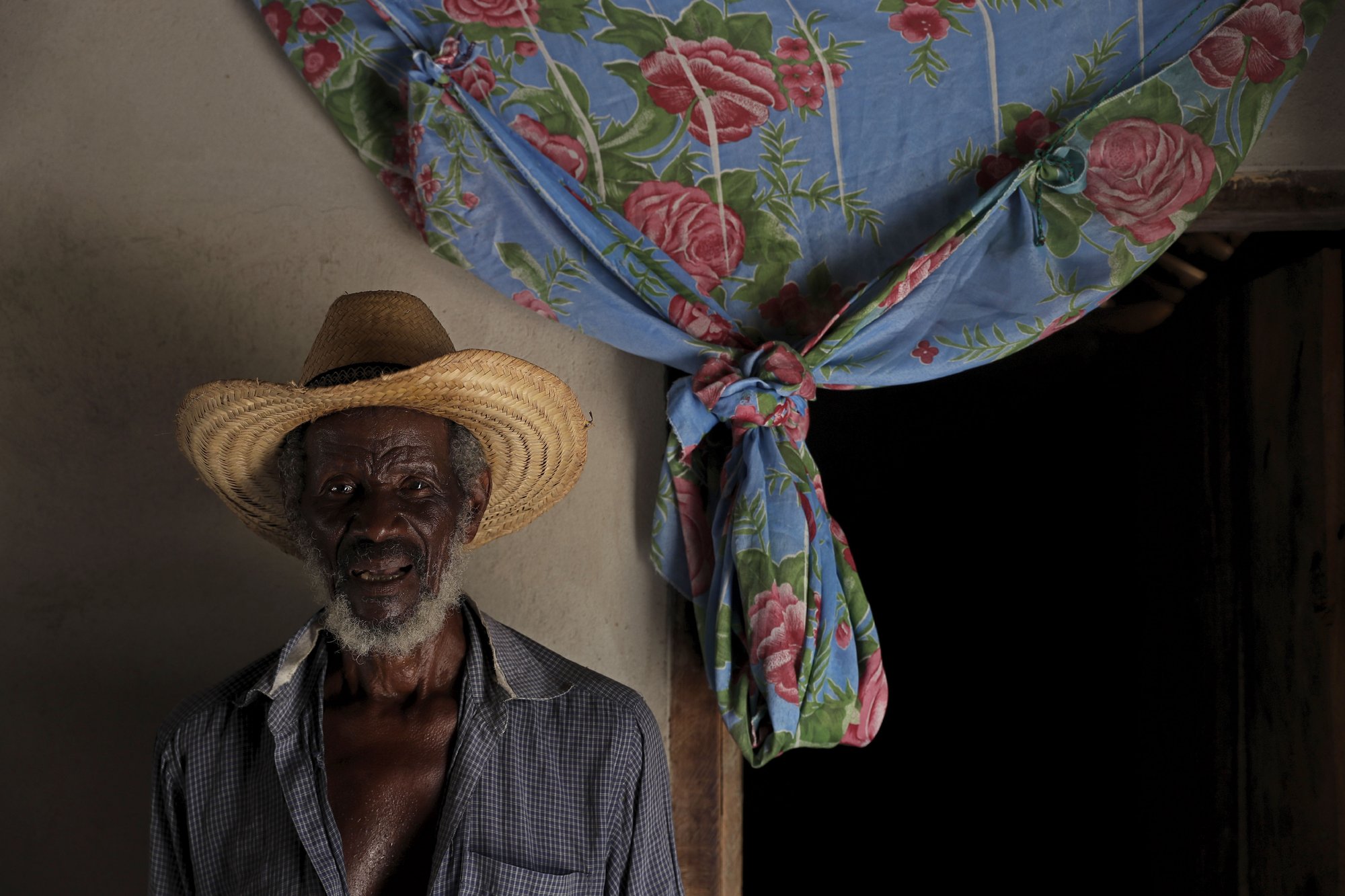
Virgilio Pereira, 86, waits for his first shot of the Sinovac vaccine for COVID-19 in the Kalunga Vao de Almas quilombo on the outskirts of Cavalcante, Goias state, Brazil, Tuesday, March 16, 2021. (AP Photo/Eraldo Peres)
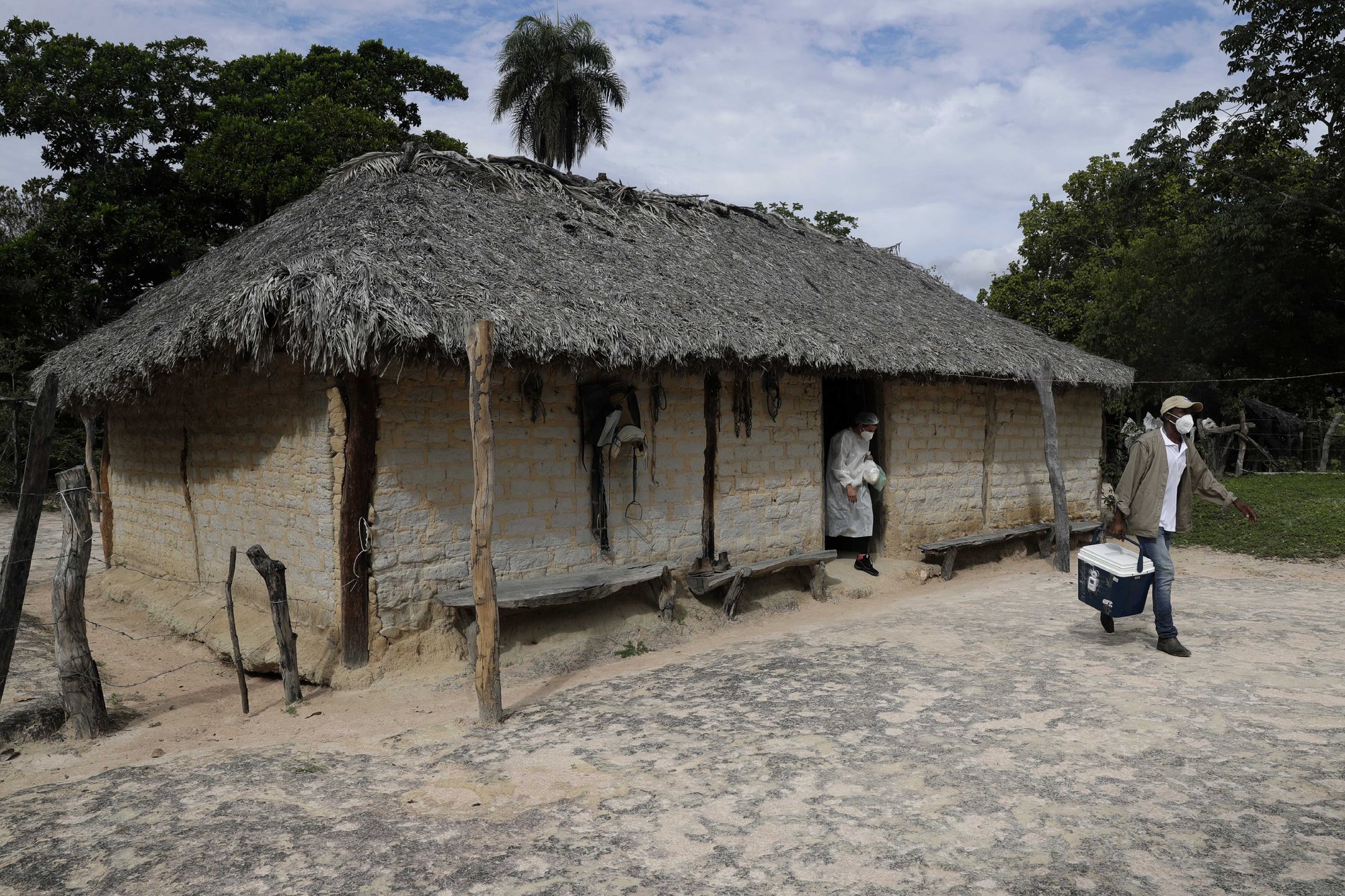
Health workers leave a home where they gave people their first doses of the Sinovac vaccine for COVID-19 as they walk house to house in the Kalunga Vao de Almas quilombo on the outskirts of Cavalcante, Goias state, Brazil, Tuesday, March 16, 2021. (AP Photo/Eraldo Peres)
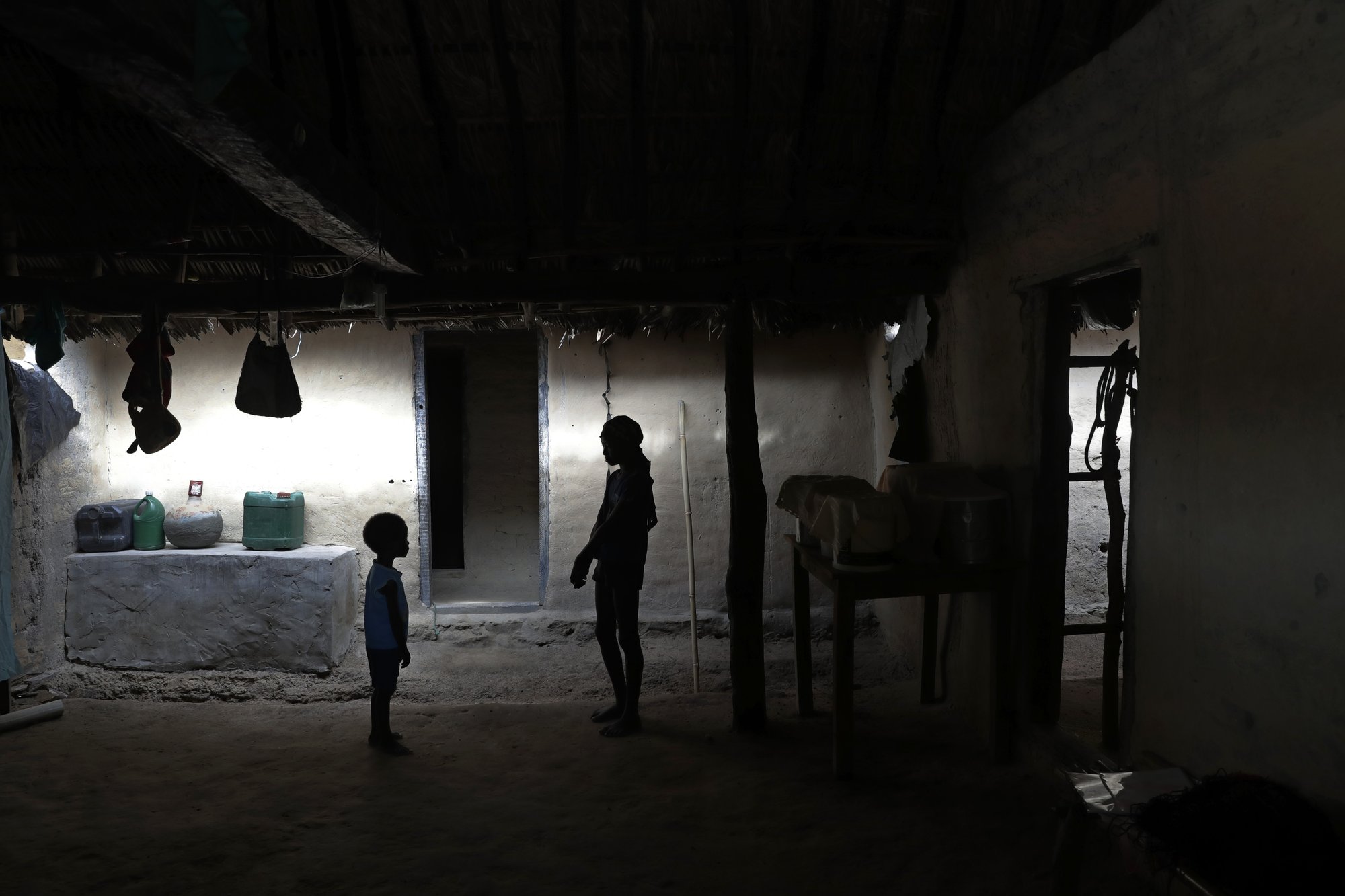
Lara Cristina, 10, holds up sitting mats to signal for health workers to enter her home as they arrive to apply the first shots of the Sinovac vaccine for COVID-19 during a house to house vaccination campaign in the Kalunga Vao de Almas quilombo on the outskirts of Cavalcante, Goias state, Brazil, Tuesday, March 16, 2021. (AP Photo/Eraldo Peres)

Nurse Rosemeire Bezerra has years of experience inoculating descendants of slaves — known as “quilombolas” — in the municipality of Cavalcante, about 180 miles from Brazil’s capital, Brasilia. Her biggest challenge in the current vaccination drive is keeping vaccine doses below 8 degrees Celsius (46 degrees Fahrenheit) in an isolated, tropical region. It’s especially sweltering in the Valley of Souls (Vão de Almas, in Portuguese) where she was headed.

ADVERTISEMENT

On Monday, Bezerra protected plastic foam coolers with cardboard shells and filled them with ice. She intended to vaccinate 190 families within four days, before that ice melted. She set off with her team and three others, including an experienced driver familiar with the remote region.

Houses in the Valley of Souls are far apart, and chewed-up dirt roads make for a jolting journey that complicates keeping a cooler balanced on laps. The many river crossings test the four-wheel-drive vehicles, too.

Full Coverage: Photography

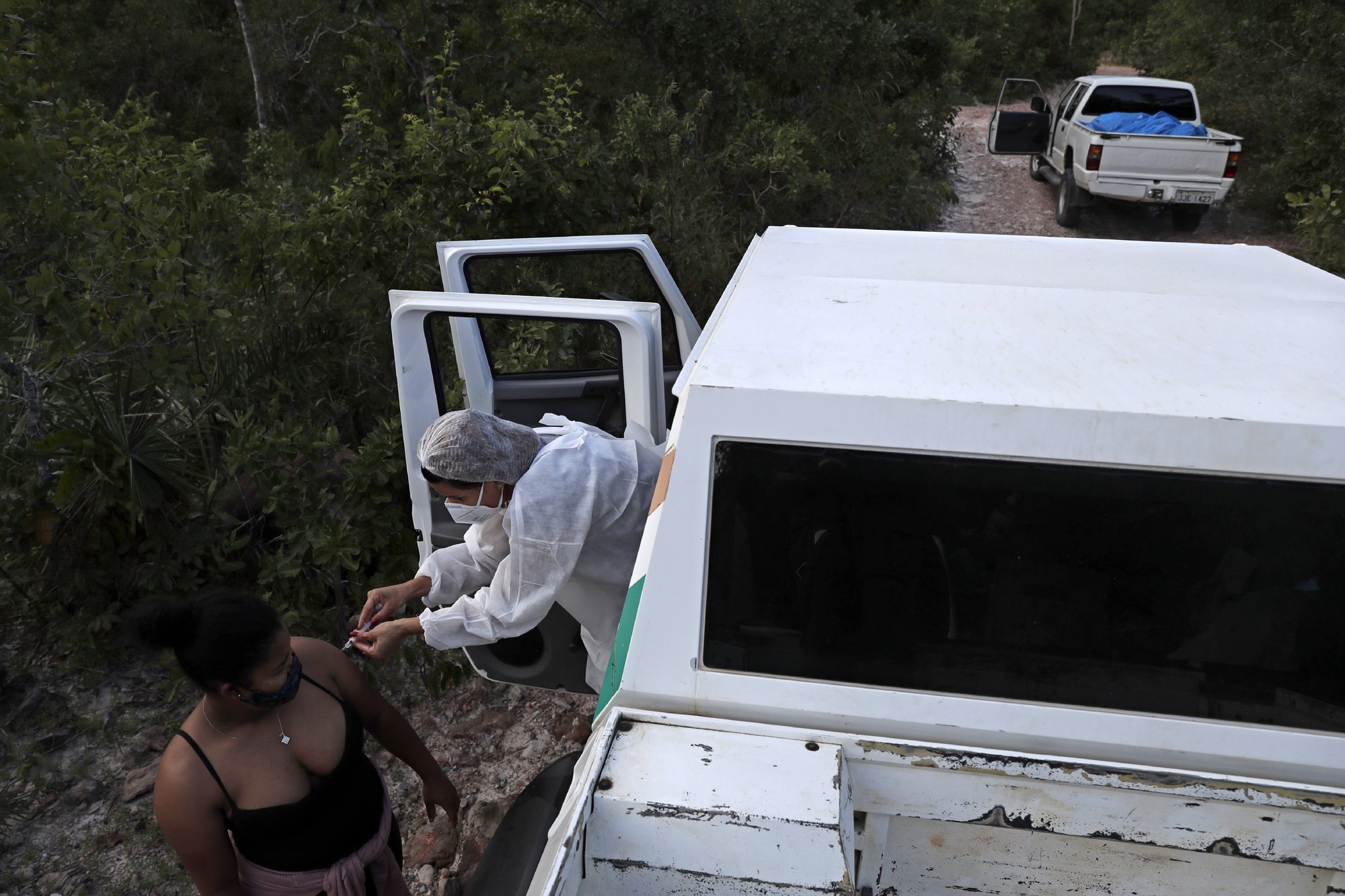
Access is so poor that Bezerra and her staffers often vaccinate people they encounter on the roadside or tending to crops in their fields, as they might not have another chance. Some areas are reached only by foot, and they have to carry in their own food and water.

Health workers cover themselves with an umbrella as they arrive to apply Sinovac vaccines at a home in the Kalunga Vao de Almas community, a rural area on the outskirts of Cavalcante, Goias state, Brazil, Monday, March 15, 2021. (AP Photo/Eraldo Peres)
Health workers arrive to apply Sinovac vaccines, in the Kalunga Vao de Almas community, a rural area on the outskirts of Cavalcante, Goias state, Brazil, Monday, March 15, 2021. (AP Photo/Eraldo Peres)
A woman reacts to seeing a syringe of the Sinovac vaccine for COVID-19 as health workers vaccinate residents in the Kalunga Vao de Almas quilombo on the outskirts of Cavalcante, Goias state, Brazil, Tuesday, March 16, 2021. (AP Photo/Eraldo Peres)

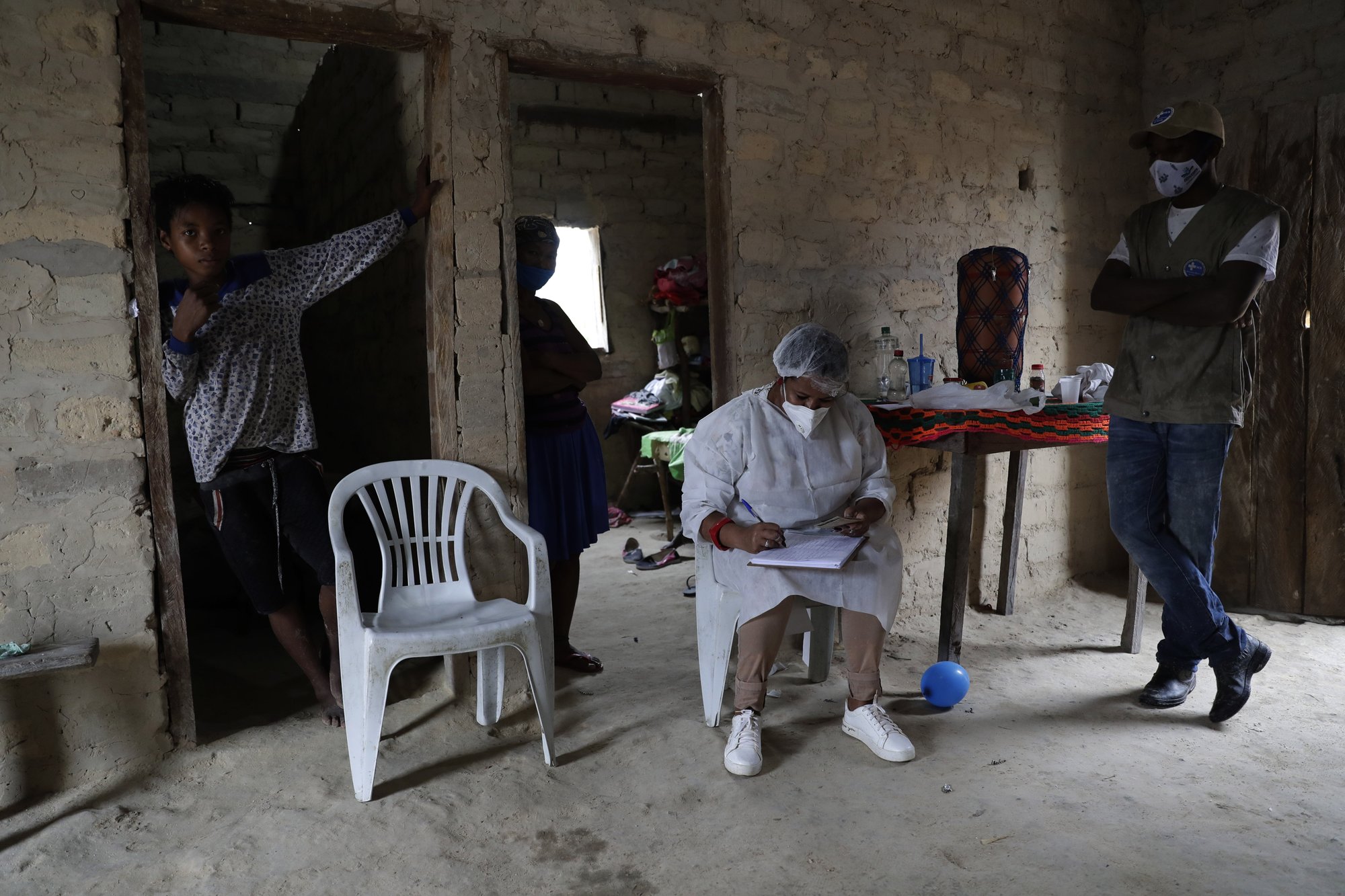
The vaccination team set up shop inside a school and pitched tents inside a classroom. Bezerra slept with a lantern and the coolers by her side.

“I woke up three times every night to see if the temperature was adequate,” she said. “It’s a very big responsibility if they’re lost. I treated those vaccines like my daughter.”

Brazil is in the midst of an alarming spike of COVID-19 cases, with nearly 3,000 deaths a day for the first time since the pandemic began. Public health experts say that restrictions on activity and social distancing can help ease pressure on hospitals’ overloaded intensive care units, but that the only long-term solution is mass vaccination in a country of 210 million people that is bigger than the contiguous U.S.

Almost 6% of Brazilians have received at least one shot, according to Our World in Data, a collaboration between researchers at the University of Oxford and the nonprofit group Global Change Data Lab. Just 1.5% have gotten two doses.

There are formidable logistics to reaching Indigenous communities, many of which are only accessible by boat, and also difficulties overcoming doubts about the vaccines.

A vehicle carrying government health workers drives to the Kalunga Vao de Almas community to apply Sinovac vaccines, at a rural area on the outskirts of Cavalcante, Goias state, Brazil, Monday, March 15, 2021. (AP Photo/Eraldo Peres)
A health worker gives a man his first shot of the Sinovac vaccine for COVID-19 inside his family's home in the Kalunga Vao de Almas quilombo on the outskirts of Cavalcante, Goias state, Brazil, Tuesday, March 16, 2021. (AP Photo/Eraldo Peres)
Seen through a rain-drenched car window a health worker runs under the rain to take a dose of the Sinovac vaccine to a home in the Kalunga Vao de Almas community, a rural area on the outskirts of Cavalcante, Goias state, Brazil, Monday, March 15, 2021. (AP Photo/Eraldo Peres)
ADVERTISEMENT

Members of the remote Baré group in Amazonas state received their vaccine jabs Wednesday after health workers travelled more than two hours from the state capital of Manaus up the Cuieiras River to the village of New Hope (Nova Esperança). Some of the villagers initially had rejected the shots.

It was hardly the only time Januário Carneiro, coordinator of the Manaus region’s Indigenous health care unit, was met with skepticism and mistrust.

Carneiro has spent hours convincing Indigenous people the vaccines are safe, and says he has been successful. So far, 71% of about 15,000 Indigenous people in the Manaus region have received their first shots, and 52% had their second jabs this week, he said.

While New Hope is home to 195 villagers, Carneiro’s journey on Wednesday was to immunize just 19 people missed on prior outings. That helps explain why priority vaccination for Indigenous people and quilombolas is a matter of efficiency.

“Imagine if you go to these isolated areas just for people over 70 years old, then have to come back later, paying for all the fuel for a boat just for a small group. That’s why, when you go, you have to vaccinate everyone at once,” Jacqueline Sachett, a nursing professor at the Amazonas state university, said in a video posted by the state-run Fiocruz Institute. “It isn’t just a matter of human rights.”

Dona Dainda, 75, celebrates after getting her first shot of the Sinovac vaccine for COVID-19 inside her home in the Kalunga Vao de Almas quilombo on the outskirts of Cavalcante, Goias state, Brazil, Tuesday, March 16, 2021.( AP Photo/Eraldo Peres)
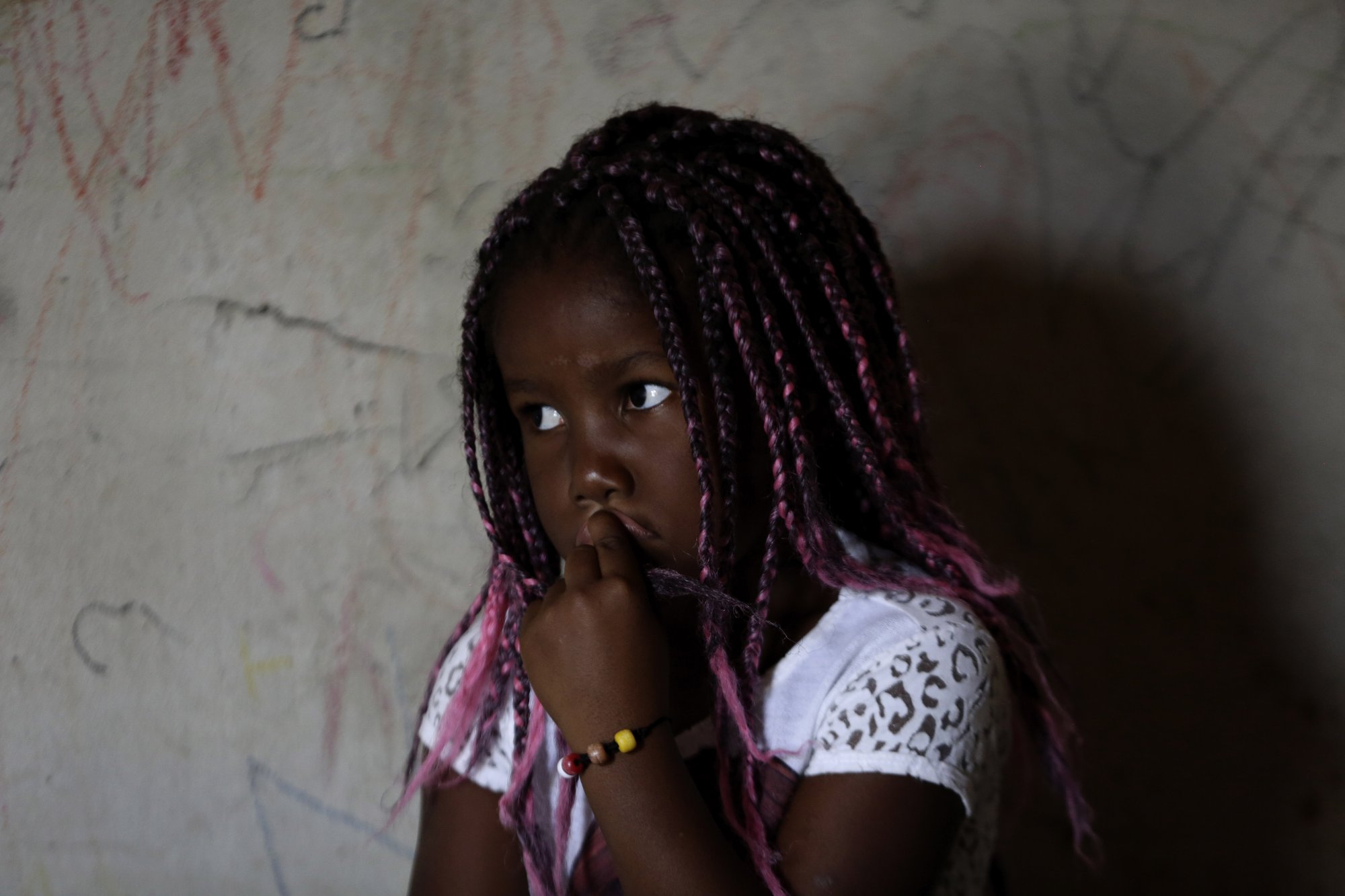
A girl watches health workers give first shots of the Sinovac vaccine for COVID-19 to people age 18 and older, inside her home in the Kalunga Vao de Almas quilombo on the outskirts of Cavalcante, Goias state, Brazil, Tuesday, March 16, 2021. (AP Photo/Eraldo Peres)

New Hope’s chief, José Prancácio, said the whole village was infected with the coronavirus after people traveling to Manaus for food brought the virus home.

Manaus suffered a devastating second wave of COVID-19 cases in January, driven by a more contagious strain of the virus. Hospitals lacked oxygen for weeks and doctors had to choose which intensive care patients to put on ventilators.

The state has seen the number of cases and deaths ebb since, but immunization still has a way to go. New Hope, for its part, is nearing immunity. After Reinaldo de Souza Santos, 37, received his shot, he held up his vaccine card to display stickers proving he had gotten both his shots.

“My people are now calm and very happy about this vaccine,” Prancácio said. “Until there’s a vaccine, a lot of people die. But today, thank God, we’re 100% satisfied.”

In Cavalcante, quilombola Manoel Pereira and his wife, Leona, received their first shots standing beside the fence of their cassava farm. Wearing a disposable gown, Bezerra calmly delivered the dose to Pereira, who looked eager to return to his labors.

“It is a very poor community, with some places that can only be reached by special pick-up trucks,” Bezerra said. “Our team didn’t spare any effort. We needed to give them some hope.”
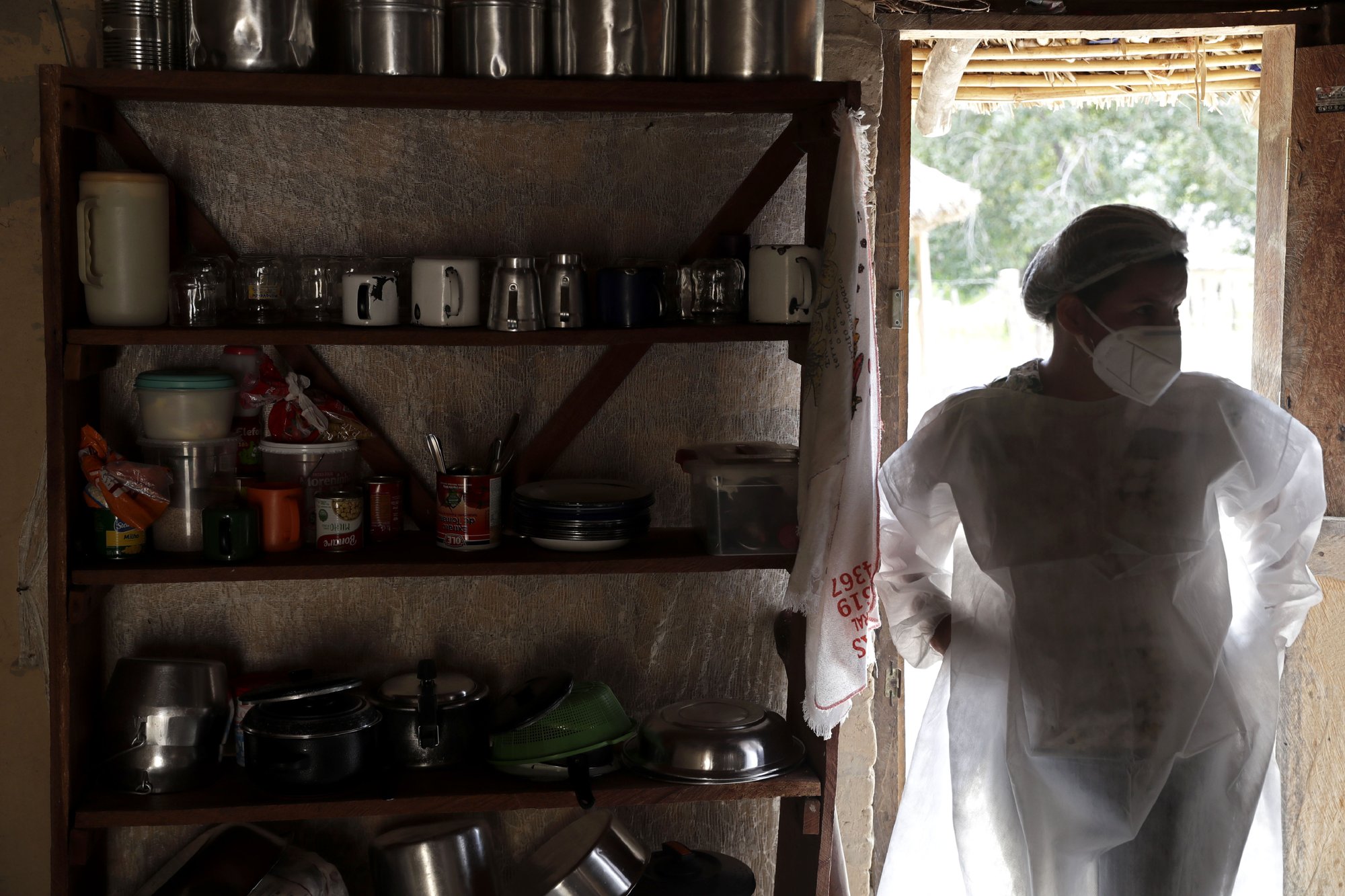
A health worker enters a family's home to give Sinovac vaccines for COVID-19 in the Kalunga Vao de Almas quilombo on the outskirts of Cavalcante, Goias state, Brazil, Tuesday, March 16, 2021. (AP Photo/Eraldo Peres)
Wearing a mask to curb the spread of the new coronavirus, 82-year-old Algemiro Dias get his first jab of the Sinovac vaccine, at the Kalunga Vao de Almas community, a rural area on the outskirts of Cavalcante, Goias state, Brazil, Monday, March 15, 2021. (AP Photo/Eraldo Peres)
Health workers arrive at the Kalunga Vao de Almas community to vaccinate the locals with the Sinovac vaccine, in a rural area on the outskirts of Cavalcante, Goias state, Brazil, Monday, March 15, 2021. (AP Photo/Eraldo Peres)
Youths look as health workers apply Sinovac vaccines in the Kalunga Vao de Almas community, a rural area on the outskirts of Cavalcante, Goias state, Brazil, Monday, March 15, 2021. (AP Photo/Eraldo Peres)
Benedita Pereir waits for her first jab of the Sinovac vaccine at her home in the Kalunga Vao de Almas community, a rural area on the outskirts of Cavalcante, Goias state, Brazil, Monday, March 15, 2021. (AP Photo/Eraldo Peres)
Children wait as health workers go house to house to give first shots of the Sinovac vaccine for COVID-19 to residents age 18 and older in the Kalunga Vao de Almas quilombo on the outskirts of Cavalcante, Goias state, Brazil, Tuesday, March 16, 2021. (AP Photo/Eraldo Peres)

Comments

Popular Posts

By FSJ 16/09/2025. The Housing and the Affordability issue: The architect said lets reason together as we build and design an energetic future with financially energized people; a discussion. By Mary Godwhen. Click here. BW Where would it go if I reverse engineer a "BAPE" shoe logo? Charles cares. He has vowed to have the most able and responsive Tiger economy in Europe and North America and the most safe and ably funded citizens in those regions; his citizens, his people. It is that we will be the economic winners; not losers; at the top and not the bottom...in front and not at the back. It would only take him a day to get it going. We can design anything. Certainly, anything we design demands and requires people with money for us to enjoy it; if it's a restaurant, an amusement park, a shopping centre or a town or city in general. The Bugatti sellers will have more sales and the Vauxhall owners will finally make full payment for the shopping and vacations; for their vehicles also. We do not enjoy suffering, lack or insufficiency. But maybe a vengeful bum might. Money is important. It has to be important. So, why are we incessantly brought to have this conversation about income support rather quite often when observing the economies west of Calais as run by; whom? Laissez Faire is not an economic policy but the policy of no policy in light of industrial mechanization of labor and the social problems it occasions when the families do not have enough money to buy their coal for heat, milk, bananas and vegetables. They would usually just take what they need; wherever they can take it. The economy is run by whom? The income support in Vermont, Minnesota and Massachusetts exceeds $70000.00 per year. This should be so for the whole, entire continent. But, some states and provinces, not all, are being run by income support benefit men touring boxes of undistributed emergency debit cards that they can now hand out to people in those camps. They seek public attention more than public efficacy. They have had enough time to solve the obvious. Money is the obvious issue but you wouldn't be waiting for an God fearing man to come and campaign on this issue when we know you can see the problem and solve it for us. We do not enjoy suffering, lack or insufficiency. But maybe a vengeful bum might. They are experimenting with money in terms of crypto or bit coin and its definition before they would agree to just HAVE MONEY. Money is the most important weapon in spite of all your Oppenheimer detonators that can't read help during peace time and for what when you would still need money?