After plane crash, Utah passes law requiring pilot insurance By TIM VANDENACK March 27, 2021. Click here.
After plane crash, Utah passes law requiring pilot insurance
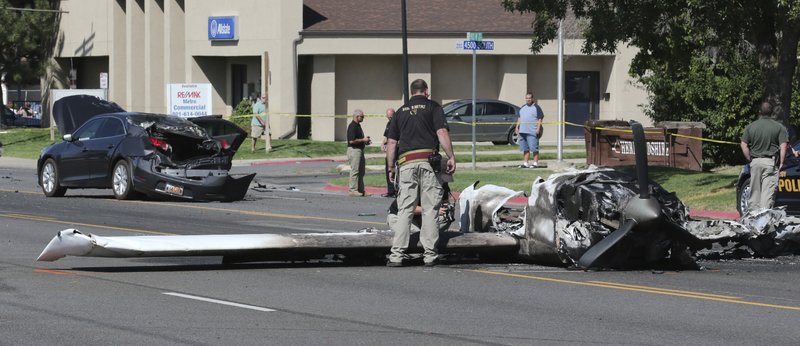
ROY, Utah (AP) — The lawsuit from a 2017 crash of an airplane on 1900 West in Roy lingers on, more than three years after it was filed.
The pilot, apparently, was not insured, leaving Samantha Sandoval — hit in her car in the Sept. 12, 2017, incident while driving along the roadway — traumatized and with bills to pay, according to Utah Rep. Cheryl Acton, a West Jordan Republican.
But in a bid to give victims like Sandoval at least a measure of help going forward, Utah lawmakers this session approved a bill requiring general Utah aviation pilots with airplanes to carry at least $100,000 in liability insurance, the Standard Examiner reported. Gov. Spencer Cox signed House Bill 77 into law last week and with the action, Utah becomes just the 12th U.S. state with minimum liability insurance or aircraft financial responsibility requirements, according to Acton and U.S. General Accounting Office data.
“I think it’s a good improvement,” Roy Mayor Bob Dandoy said. Over the years, Roy, which abuts Ogden-Hinckley Airport in Ogden, has been the site of a number of crashes of small aircraft, and leaders in the city are particularly mindful of the issue.
However, the new law isn’t a panacea, some say.
The Federal Aviation Administration is mainly concerned with the safety of aircraft and doesn’t have rules related to liability in crashes, according to Acton. Thus, it’s up to states to craft legislation, and HB 77, motivated by a deadly 2020 crash of a plane in West Jordan that destroyed a home there as well as crashes like the one in Roy, is her effort in that direction.
In the absence of insurance to help in the aftermath of certain plane crashes, victims have to resort to court action, Acton said. And going to court, she went on, “makes it time-consuming and difficult.” At the same time, though, she didn’t want to put liability requirements too high in HB 77 and make insurance costs overly burdensome for aircraft hobbyists.
Indeed, Bryant Garrett, manager of Ogden-Hinckley Airport, said the idea behind HB 77 is good. The insurance requirements, though, are a bit skimpy. “It was done for the right reasons with good intentions, but it’s a little short on money,” he said.
At the same time, Garrett said many airports, including Ogden-Hinckley Airport, already require insurance of pilots who house their airplanes at their facilities. In Ogden, pilots are required to have at least $1 million in insurance.
Robert Fuller, the lawyer representing Sanodval in her lawsuit against the pilot of the 2017 airplane and others allegedly involved, echoed Garrett’s sentiments on the liability levels. “It’s a good start,” he said.
He also noted, though, that medical costs in an airplane crash can quickly mount. Better would be implementation of uniform insurance requirements at the national level, applicable to pilots with airplanes across the nation.
The feds are aware of the issue. A 2015 General Accounting Office study into the insurance question says commercial air carriers are required to carry liability insurance under federal law. No such federal requirements exist for owners of small aircraft, though.
“In some cases, accidents involving uninsured or underinsured (general aviation) aircraft owners have occurred where individuals (passengers or third parties) who incurred losses received little or no compensation,” reads the 2015 report.
In the 2017 plane crash, the pilot, Lawrence Erick, was carrying out a “pre-buy inspection” of the craft involved, a Beechcraft Sierra, according to a statement he made to federal transportation officials shortly after the incident. He is believed to be from Arizona, according to Sandoval’s lawsuit. While in flight, according to Erick’s statement, the craft experienced technical issues, precipitating his effort to land on 1900 West and the collision with the Sandoval vehicle.
Sandoval filed suit in 2nd District Court in Ogden on Feb. 2, 2018, against Erick and others involved in airplane maintenance at Ogden-Hinckley Airport. Erick has denied blame in the matter and the suit winds its way through court.
- Get link
- X
- Other Apps


Comments
Post a Comment