America disrupted: Troubles Cleave A Nation And A City
By JOSH BOAK and KAT STAFFORD
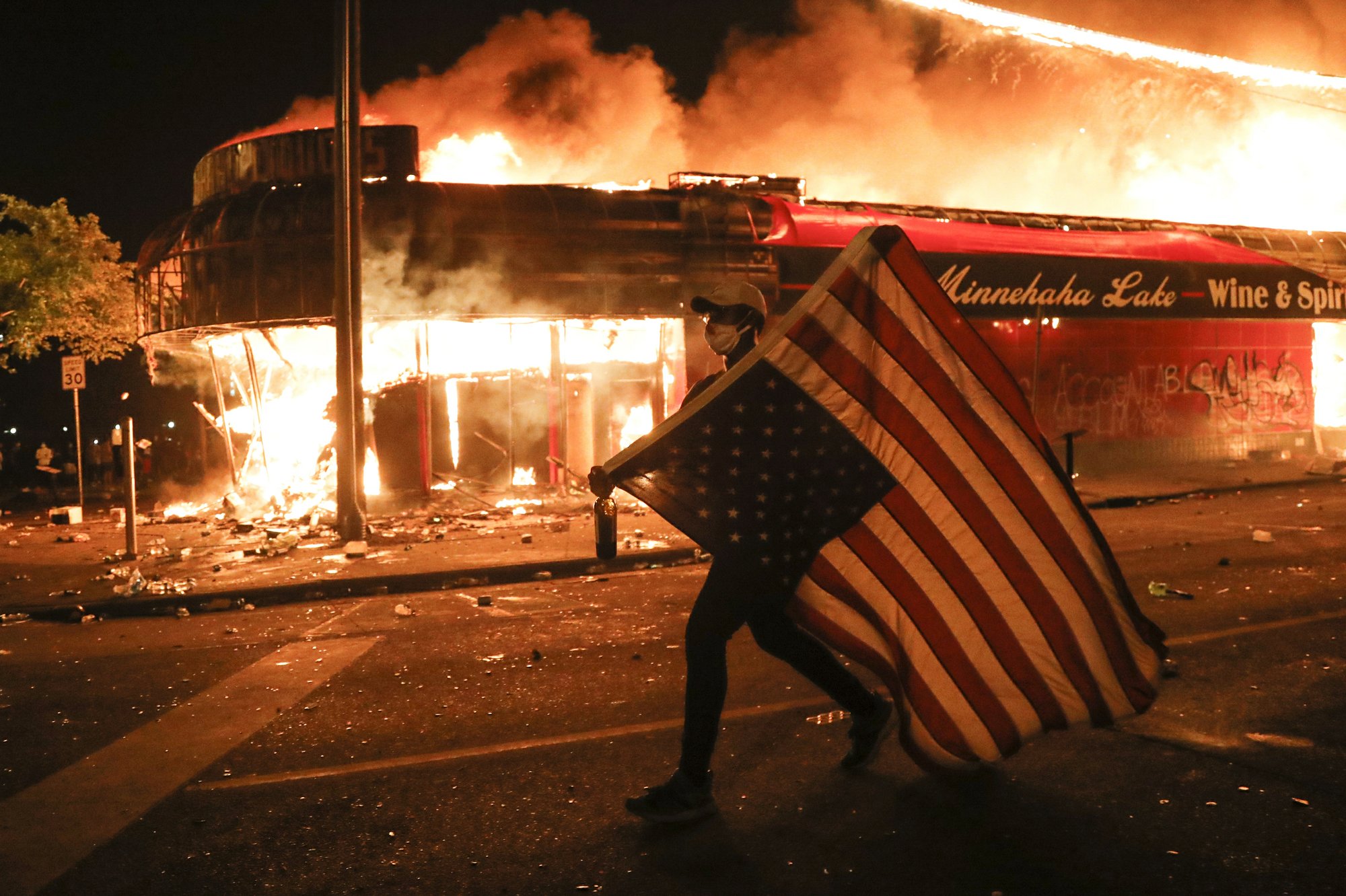
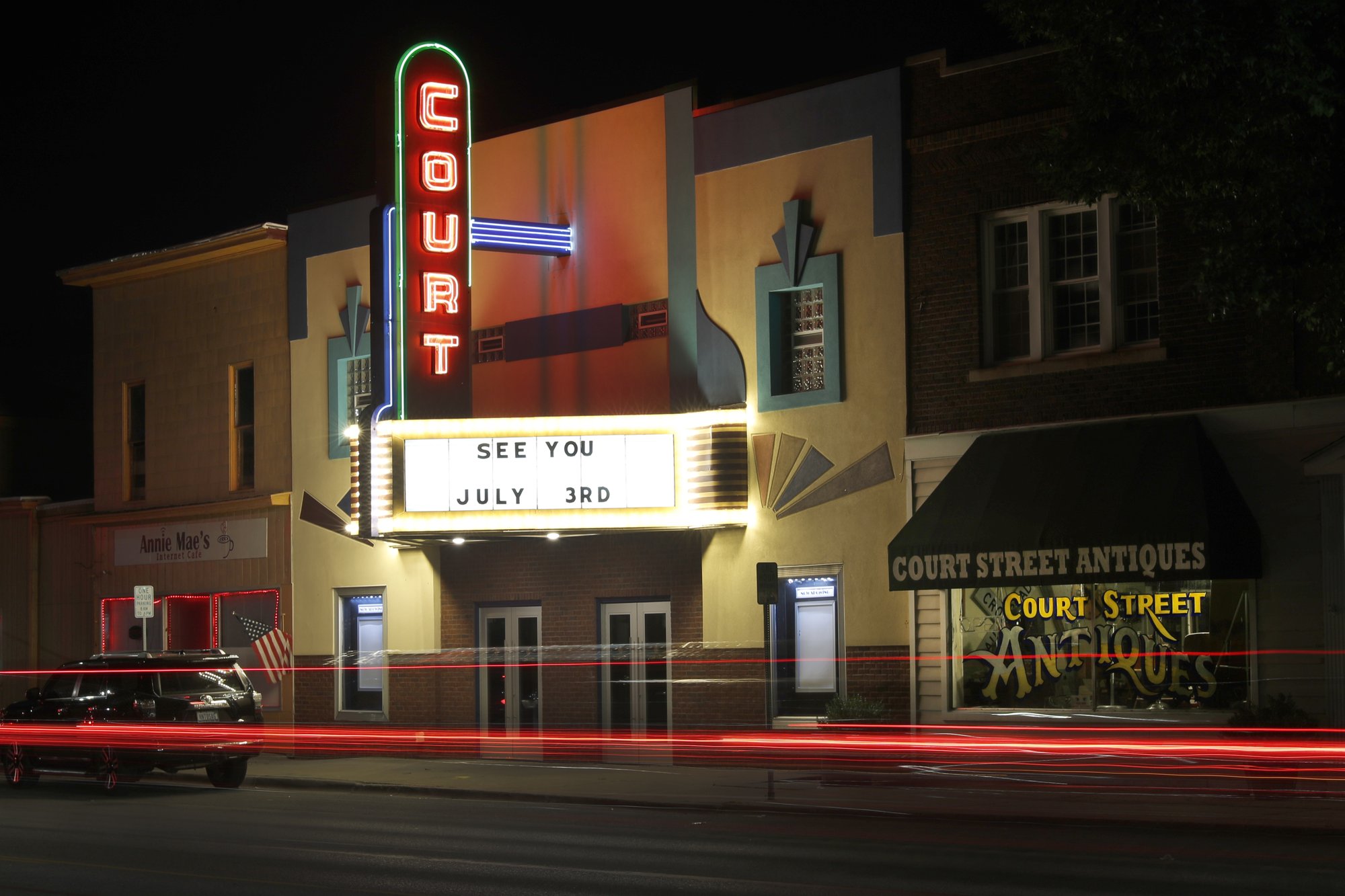
SAGINAW, Mich. (AP) — It was difficult to celebrate America in Saginaw this year. The deadly coronavirus had torn through the county. Unemployment had surged five-fold. Weeks of protest over racial inequality left many debating what should be hallowed and what must be changed.
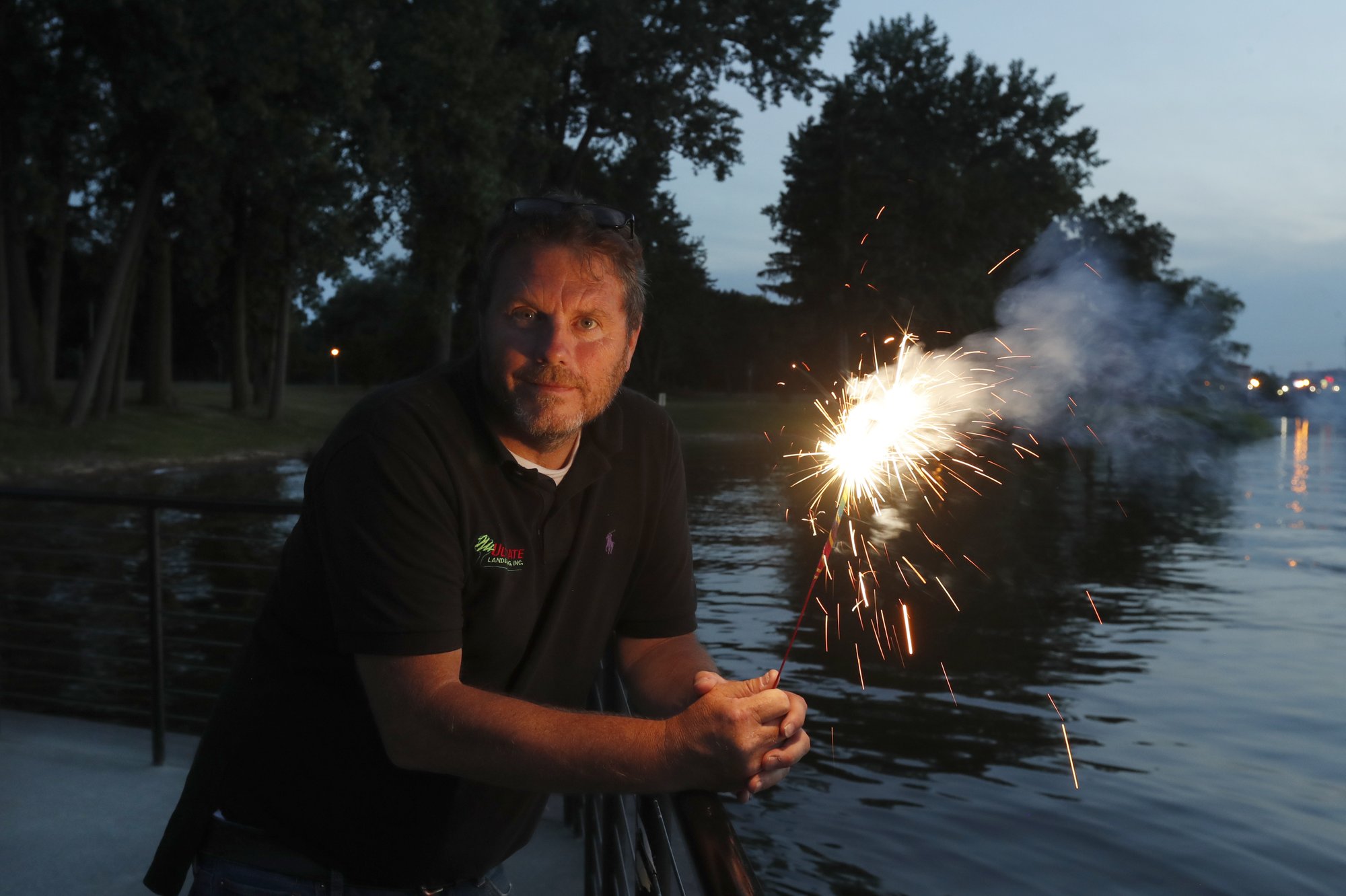
But Tom Roy had given it his best. As the head of the July Fourth fireworks board, he struggled to save the display of red-rocketed flares and bursting peonies, fruitlessly seeking a venue that felt safe from the sickness.
He couldn't do it. So Saginaw canceled its festivities, upsetting many of Roy's neighbors who lost an opportunity to unify a bitterly divided community for one night.
The dark skies over this mid-Michigan city were a plaintive marker of a nation utterly disrupted in a matter of months.
___
EDITOR'S NOTE — Americans are preparing to choose a leader and a path through a time of extraordinary division and turmoil. Associated Press journalists tell their stories in the series "America Disrupted."
___
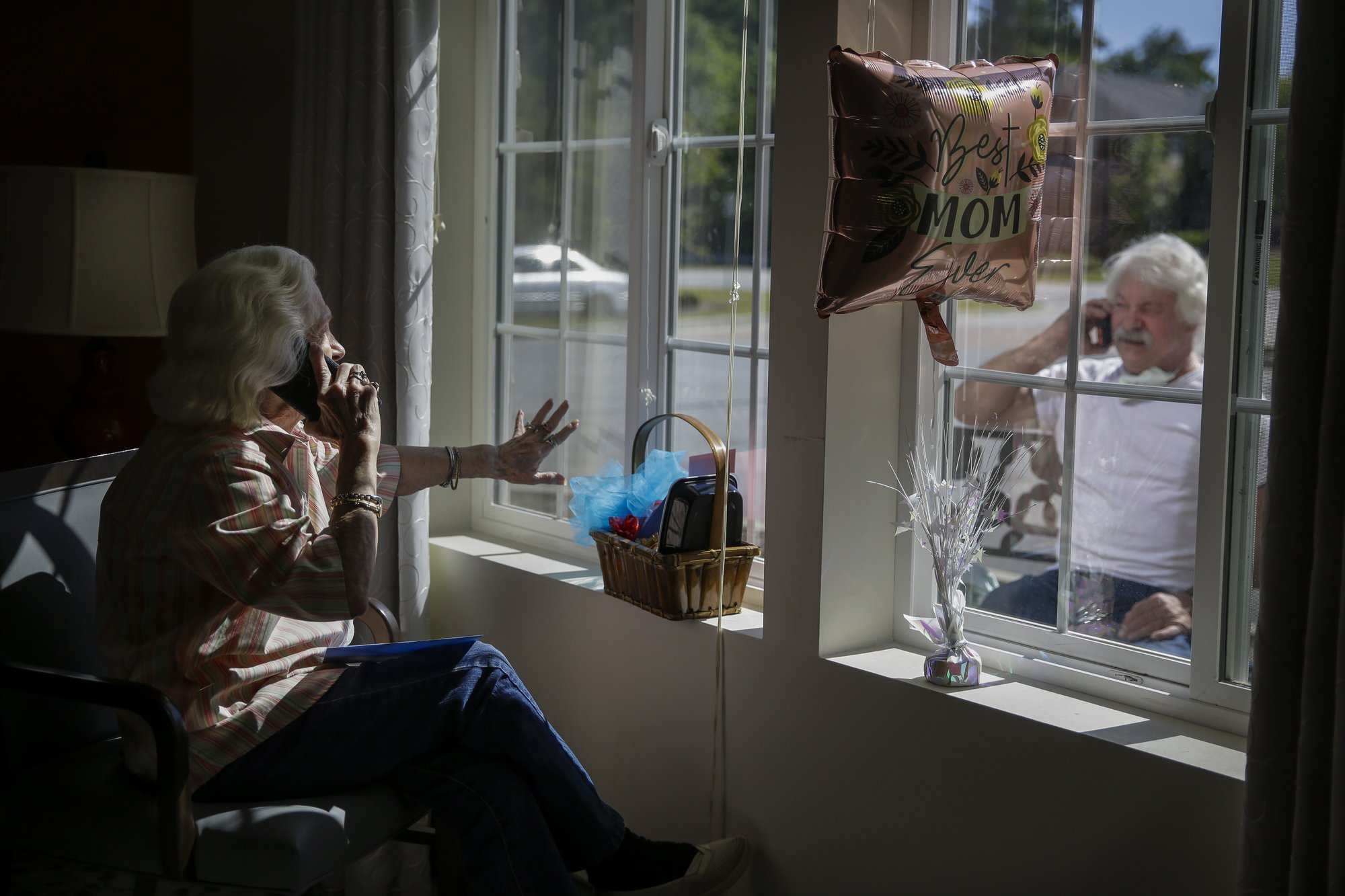
This period of national crisis has not inspired unity. Americans are aiming their anger at each other, talking past each other, invoking race, class and culture. They cannot even agree on the need to wear a mask to protect against a virus that has killed more than 130,000 Americans.
These forces are converging as the country hurtles toward a convulsive presidential election. President Donald Trump continues to portray himself as a disrupter, with a wrecking-ball agenda that is rooted in nationalism and roils racial divisions — taking the stage over the July Fourth weekend to warn of "new far-left fascism" that would tear down "our national heritage." His Democratic rival, Joe Biden, meanwhile, calls for a national reset to something resembling normal for a "suffering" nation.
"It's never been this divided," says Roy, vice chair of Saginaw's Republicans.

It is in places like Saginaw County, Michigan, which narrowly flipped from voting for President Barack Obama to voting for Trump, where clarity about America's future is likely to come.
The traditional battleground states of Michigan, Pennsylvania, Wisconsin and Florida, and emerging ones such as North Carolina and Arizona, have all been hit with the triple shock of a pandemic, recession and an uprising against police abuse. The political fallout is unfolding, leaving a striking degree of uncertainty just four months from Election Day.
Will younger voters, whose generation is the first since World War II to be faring worse than their parents, turn out? Will older voters, those most vulnerable to the coronavirus, seek change? Will the growing political power of Black women manifest itself in ways that swing key states? Will the suburbs once again provide the pivot points in the country's partisan divide?
The election will provide answers to all these questions, but not necessarily to the central issue of American life in the year 2020: Can the United States pull itself together?
The country is beset by "parties who see each other as 'the other' instead of collaborators in a democracy," says historian Doris Kearns Goodwin.
"A crisis allows you, if you've got the leadership, to unite the nation. What's needed — and we've seen this for a while — is a national direction," she said.
___
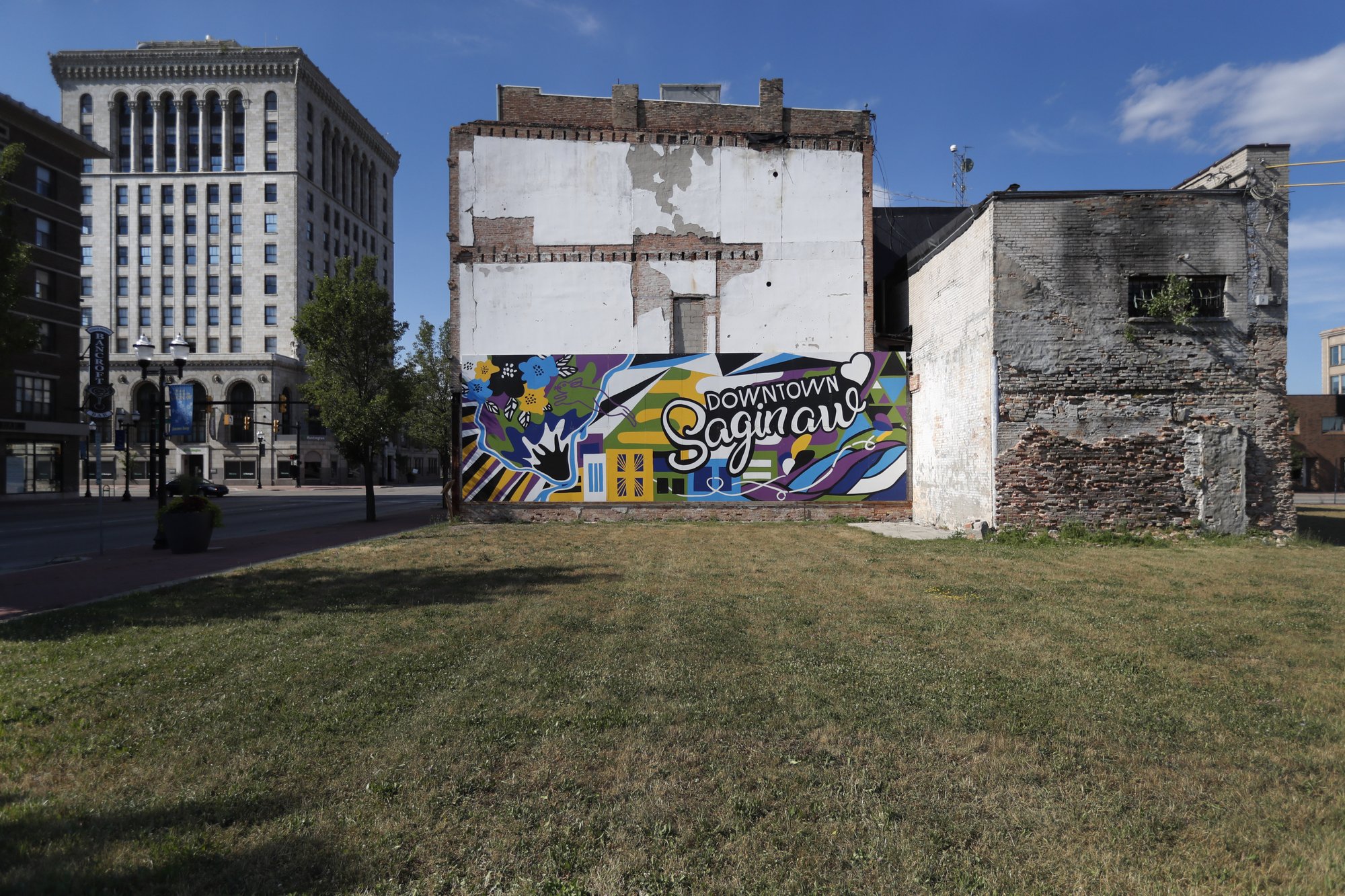
In 2010, out of love for his ailing hometown, a Saginaw artist spray-painted some familiar lyrics on the husks of buildings and stumps of concrete steps: "I'm empty and aching and I don't know why."
But in 1968, when Simon & Garfunkel released "America" — starting their hitchhiking narrator's cross-country odyssey in Saginaw — the city was a very different place.
The population then was nearly twice as large as the 48,115 people who now call it home. General Motors alone operated at least eight plants in the city and surrounding county, providing middle-class jobs that drew African Americans from the Deep South. The Great Migration gave Saginaw its most famous native son: Stevland Hardaway Judkins, better known as Stevie Wonder.
The Saginaw River slashes a diagonal line through the city and became a dividing line between Black residents on the east side and white residents on the west.
GM stumbled and there were layoffs and closures — manufacturing jobs dropped by 50% in the last 30 years. White people fled to the suburbs, the population declined, and the question arose: How to save Saginaw?
The answers have been disjointed — and none erased the economic inequality or racial segregation. The city of Saginaw, 45% Black, has a median income of $29,800, while the majority white county has a median income of $47,000.
In 2016, the area ended a Democratic voting streak. By just 1,073 votes, voters in the county entrusted Trump to revive its fading industrial hub.
Yet the people of Saginaw are now coping with a 20.7% jobless rate, more than four times the rate on Election Day 2016. There have been 123 confirmed deaths so far from COVID-19, among the top 10th of counties per capita nationwide. Trump's promise of a renaissance in manufacturing remains unmet.
And despite all the hardship, or because of it, Dave Adams believes that Saginaw might help save America — from Trump.
Until February, Adams was athletic director at Swan Valley High School, a suburban school with about 580 students. He had dabbled in local politics, enjoying the competition that so reminded him of sports, but Trump's election changed him.
The former social studies teacher used to make a point of teaching students about respect for the presidency. But Donald Trump, he thought, showed no respect for the office he held.
At 47, in a sort of midlife political crisis, Adams left his job. He would help turn out voters for the Democrats. He wanted to live without regrets, he says.
"You don't want to look back and say woulda, coulda, shoulda," Adams says.
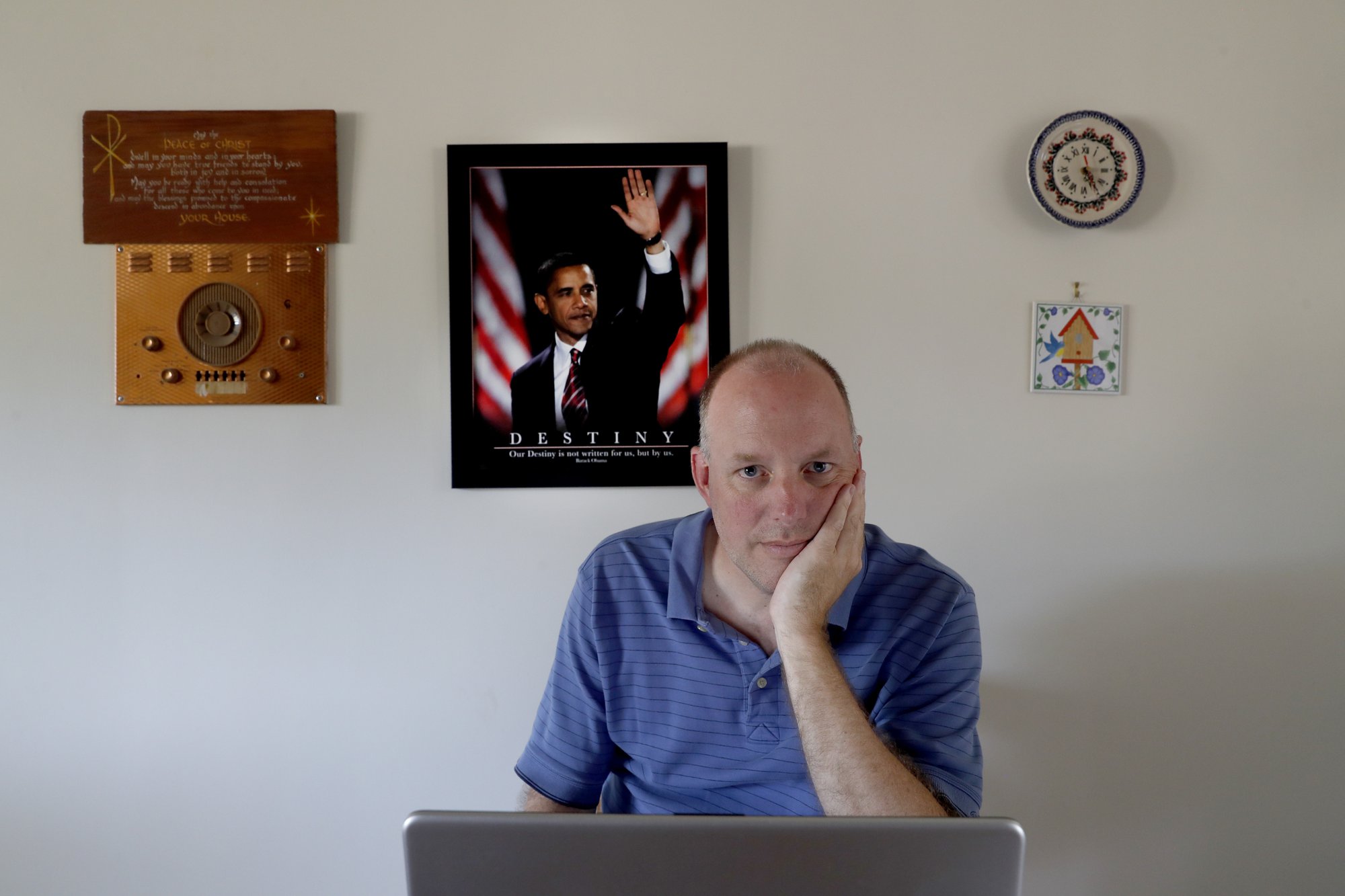
Trump's very nature had forced him to take a stand. "I always thought that the president should be a role model," Adams says. "The current president is so far from it, for me, that it blows my mind. It's everything I'm against."
Trump came to power as a bulldozer, an approach that had wider than expected appeal in a country that was fed up with Washington's chronic fighting and inertia. The president has emphatically kept his promise to upend American politics, but in the process has ripped at racial wounds, antagonized allies and courted foes, been impeached and acquitted, and flouted norms of presidential leadership.
Relatively few Americans think Trump tells the truth or cares about people like them, but neither point is a deal-breaker for his supporters. A majority of Americans believe the country is off track and in a June poll by The Associated Press-NORC Center for Public Affairs Research, about two-thirds said they believe Trump is making America more divided.
Even Republicans are more likely to describe Trump as divisive than unifying, 37% to 20%. But they still overwhelmingly approve of the job he's doing.
They like the idea of a tough businessman who speaks his mind, cuts taxes, appoints conservative judges and promises to crack down on illegal immigration. And even if they have misgivings about his style, many Republicans believe a Democrat would be worse.
But the Trump style that worked well in times of relative calm — inattention to detail, indifference to briefings, go-with-your-gut decisions — is now facing an ultimate test in the face of real crises, not those of his invention.
A virus cannot be dispatched with a tweet. Four months into the fight against the disease, the U.S. has more than 2.9 million infections.
For Adams, that means his new job — canvassing neighborhoods looking for voters — has become a health risk, and much of the work has shifted to calls and online meetings.
The pandemic also exposed his own financial vulnerabilities. He had planned to return to a school district after the November election. He needs just two more years of service to qualify for a pension. But it's still unclear how schools will reopen in the fall — and whether anyone needs a substitute teacher if classes move online.
Out of caution, Adams began a new job this month as a school custodian.
"I'll take what I can get," he said.

___
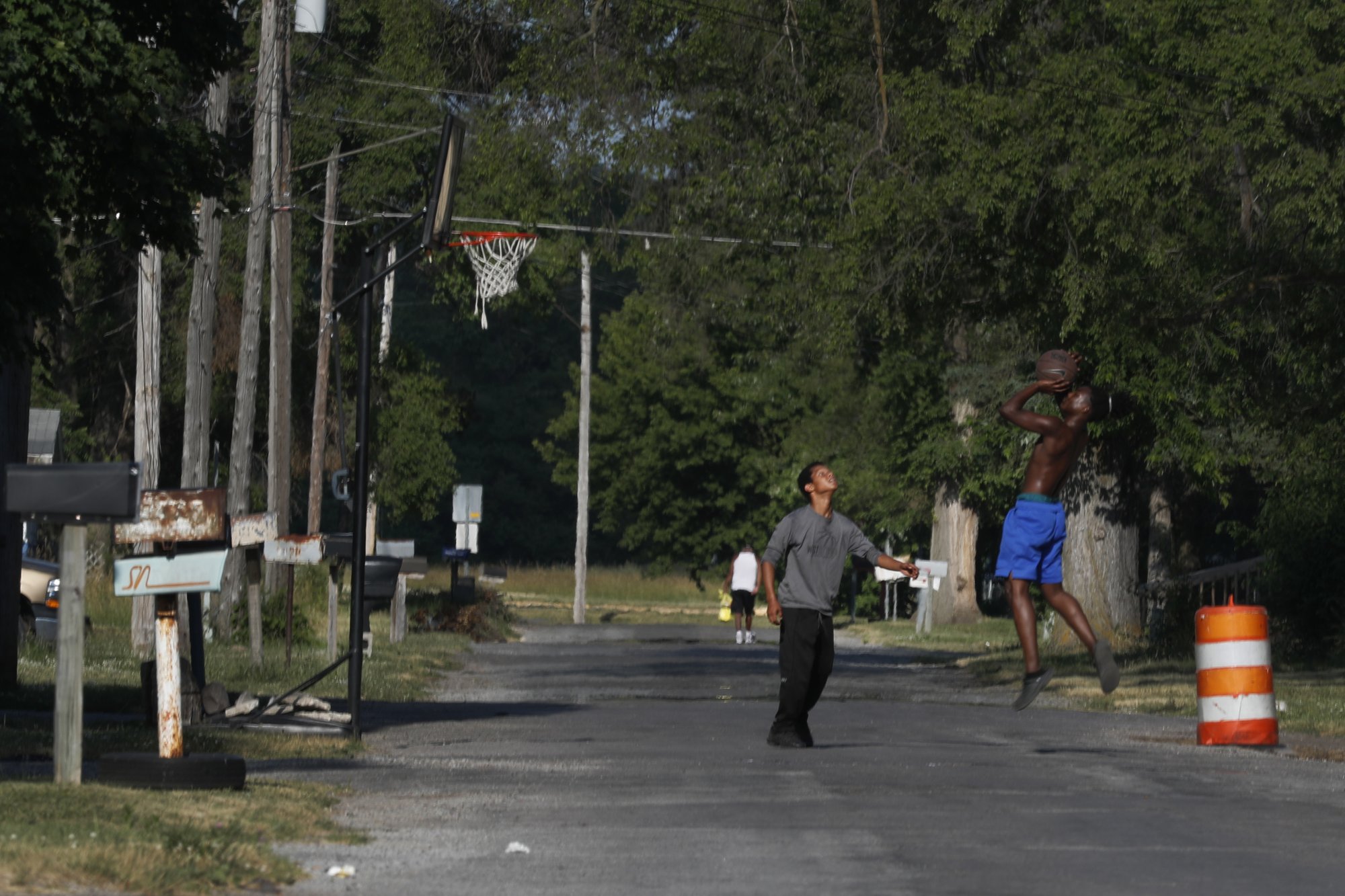
Hattie Norwood doesn't remember a time when Saginaw was a growing middle-class haven. At just 31, she's already witnessing the second major recession of her adult life. She sees Saginaw's problems — crime, poverty, struggling schools, food deserts — as entrenched. Déjà vu, she says.
Norwood has tried to take it in stride. As a Black woman in America, "I can't let them see me sweat," says the communications consultant and mother of four girls.
She remembers well the protests that erupted eight years ago when Saginaw police officers fatally shot at Milton Hall, a Black homeless man who was waving a pocket knife, 47 times. The officers never faced charges. She marched then.
But this moment has changed her.
Norwood watched with frustration as the coronavirus seemed targeted at her community, tearing through Black neighborhoods at a disproportionate rate. The economic collapse that followed only made things worse. And with schools closed, kids were deprived of the free meals upon which they depended.
So Norwood and eight strangers she connected with online met in a Tim Hortons coffee shop in March to devise a plan to distribute food to families.
When George Floyd, a Black man, died after a Minneapolis police officer pinned him on the ground for nearly 8 minutes, she went a step further. She and others organized the county's first protest in response and later launched Saginaw's own Black Lives Matter chapter.
"I've gained my political grounding," Norwood said.
It felt right to join the wildfire of activism that spread across the country after protests and riots raged through Minneapolis. The marches filled American streets, even in conservative bastions. They called attention to police brutality and deaths of Black men and women at the hands of police — to deaths like that of Milton Hall — but also evidence of racism in housing, health and education. They've toppled Confederate monuments and statues of past leaders.

The next phase of the protest movement is still evolving. Many activists say they're focused on local issues — largely overhauling police departments — and not the presidential race. Still, Democrats hope it's part of a warm-up for November. Young, liberal voters have been cool to Biden, a 77-year-old moderate, and a fight for racial justice may be the thing that mobilizes these often elusive voters.
They'll have extra hurdles this year. The virus has shaken up voting, pushing many Americans to vote by mail for the first time. Norwood intends to ensure that people are ready.
"We're talking more about voter education in our community and I am for doing whatever it takes to get Trump out of office." Norwood said. "When I leave this place, when I'm gone, there will be brown girls after me and I just can't fathom a world that continues in this way."
__
Tom Roy, a white man, sees a very different America. In his experience, anyone who sacrifices can buy into the stock market and get ahead.
At 57, Roy thinks of himself as a Reagan Republican and a self-made man. Roy started playing the stock market in the 1980s, but the profits really piled up years later while working as a manager at a roller rink. He did well enough to buy a Corvette (and six others since).
Trump had planned to make Roy's pocketbook politics the heart of this campaign. Republican-leaning voters often express reservations about Trump's Twitter feed, but they like his tax cuts and handling of the economy.
The almost-overnight recession disrupted that plan.
That pain hit Republican and Democratic areas alike, even as COVID-19 was initially concentrated in urban centers and coastal cities. That disconnected impact helped breed skepticism about the virus' danger and fuel the resentment about government-ordered business closures that seemed unnecessary.
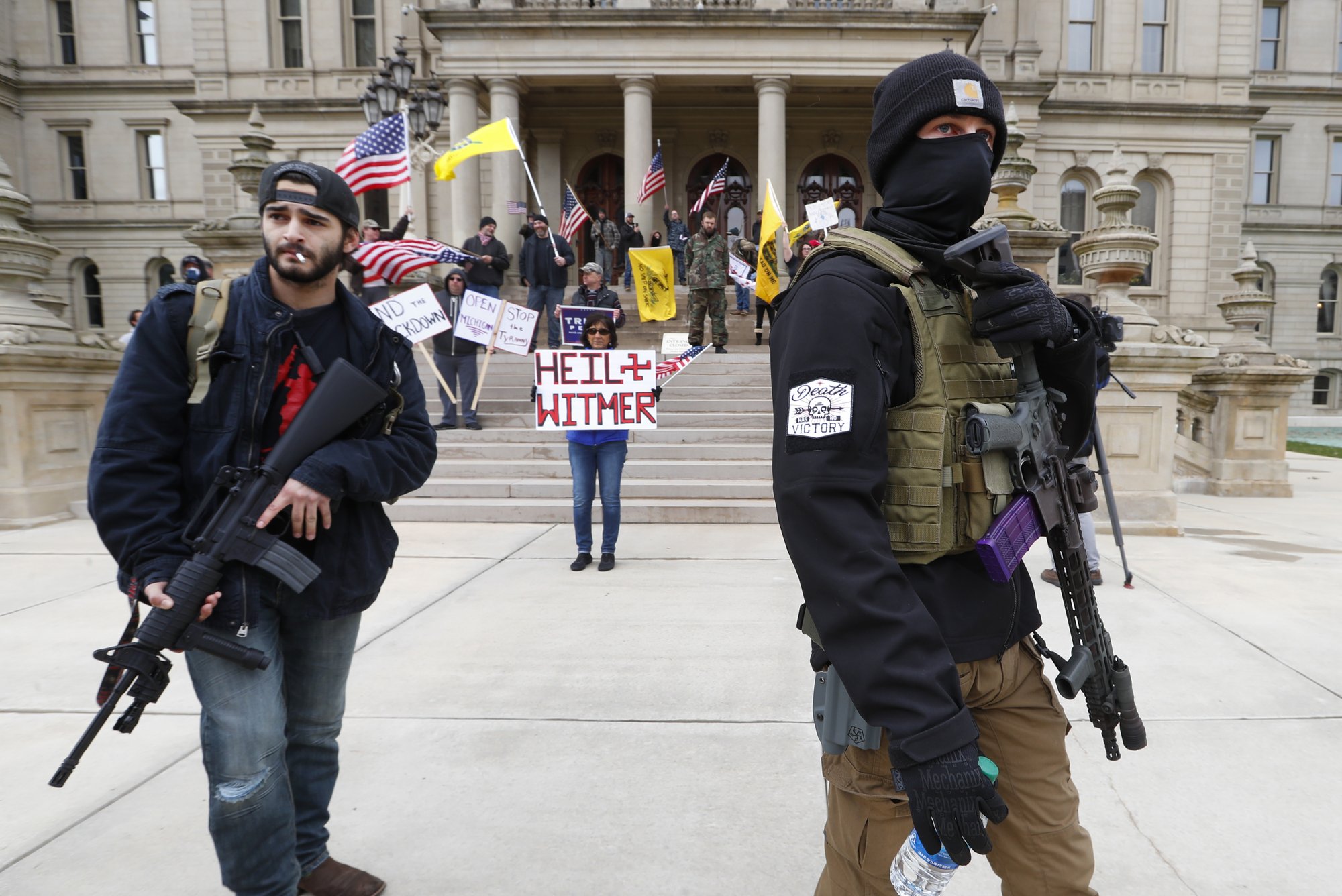
As businesses started to reopen in June, so did the offices of the Saginaw County Republicans — in time for riled-up voters to come by, asking to sign a petition to recall the Democratic governor, Gretchen Whitmer.
Many Republicans blamed her stay-at-home orders for Michigan's economic morass. Protesters and an armed militia filled the statehouse to demand an end to the restrictions some labeled "tyranny." Prosecutors even charged one of her critics with terrorism for making credible death threats against her.
But there was a hitch in the recall effort: There was nothing to sign.
"People on Facebook and social media had talked about recalling the governor," said Roy, a GOP candidate for town trustee who marvels at what he views as evidence of pro-Trump energy. "We never had a document."
The virus has now shifted course, spreading with alarming speed into Republican counties in the south and southwest. Some GOP governors have been forced to follow in Whitmer's path, to close bars, talk up wearing masks and urge people to stay home.
The surge in red America seems to contradict the Trump campaign's message that the country — the economy — is already coming back.
But in a polarized America, shared facts are hard to find. About two-thirds of Republicans viewed economic conditions as "good" in June, even though the unemployment was near the highest in 70 years. An overwhelming majority of Democrats held the opposite view, according to AP-NORC polling.
Indeed, Roy's view on the economy is filtered through his own experience. Business has been steady at his landscaping company — the grass keeps growing during a pandemic. He recently mowed the lawn around the temporarily closed Fashion Square Mall after it crested 2 feet.
Roy says he thinks most companies will learn to adapt during the crises. He notes the stock market has nearly recovered to where it was before the pandemic.
"Everyone has a chance to make money — that's what is great about America," he says.
___
"Michigan seems like a dream to me now," says the narrator of the song "America," deeply weary as he boards a bus in Pittsburgh.
Look for America in 2020 and you'll find exhaustion. So many tribulations, so much strife. But there are those in Saginaw who say maybe the United States isn't being pulled apart. Maybe it's growing, even if uncomfortably so.
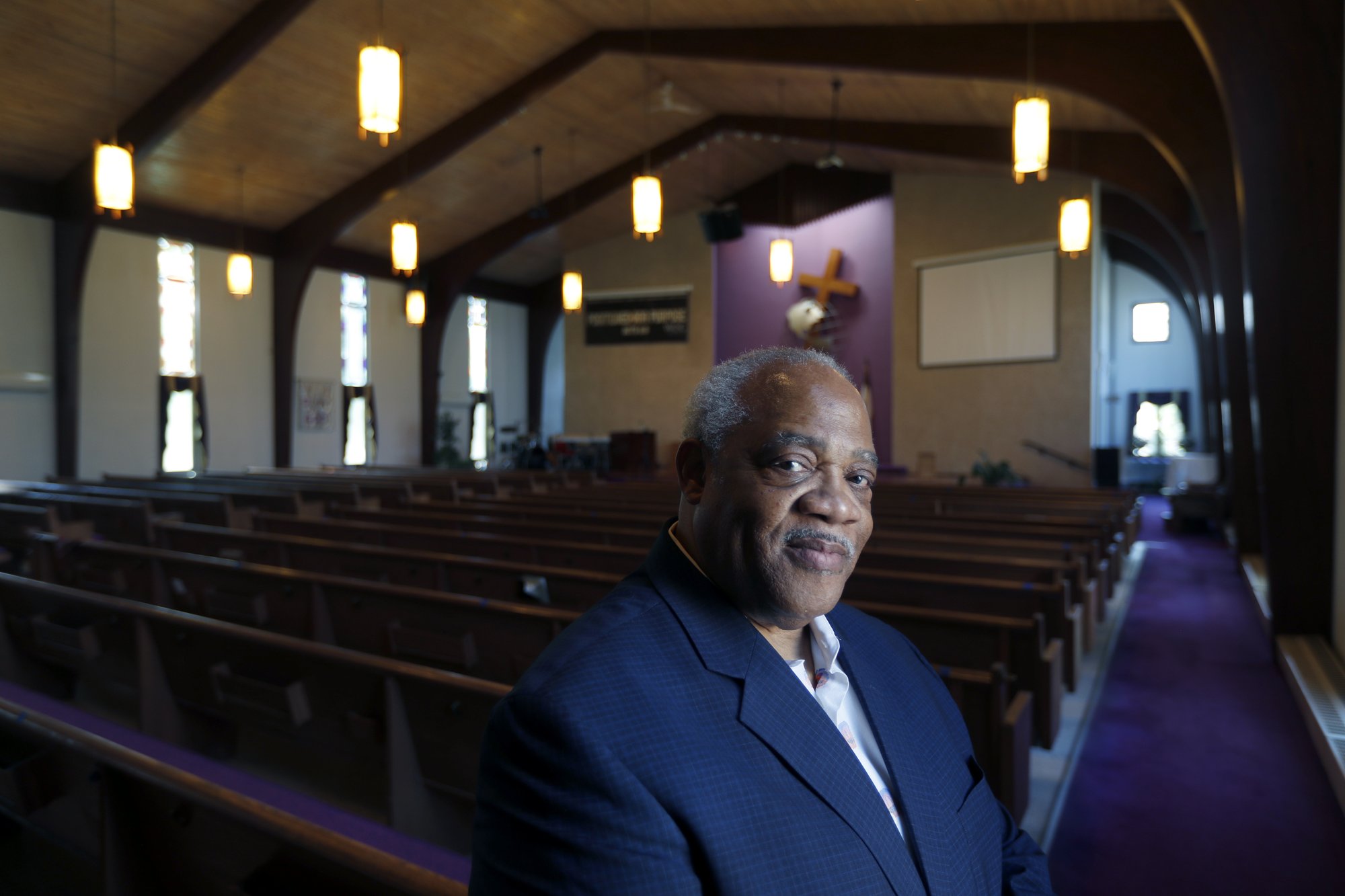
The Rev. Hurley Coleman is head of the World Outreach Campus Church, a congregation founded by his parents in 1957 in their living room on Saginaw's east side. He knows it's a hard time to talk about hope.
In the past month, he's lost a parishioner to gun violence. Many in his congregation are struggling to survive on low-wage jobs or as front-line health workers. He hasn't delivered a sermon in person in weeks, but he has participated in three marches since last month.
Those recent protests were the first time he's seen Black and white people march together in Saginaw for racial equality, he said. They walked together — crossing the bridge over the Saginaw River — to call for change. It made him think this might be a moment of such upheaval that even long-standing barriers are broken, divides disrupted.
"This is one of those terrible growth moments where people of goodwill and good thought can bring us to another level," Coleman said. "When you build on truth, anything is possible."
___
Associated Press writer Nicholas Riccardi contributed to this report.


Comments
Post a Comment