US auto sales slump, stalled by car computer chip shortage By TOM KRISHER 5 minutes ago
US auto sales slump, stalled by car computer chip shortage
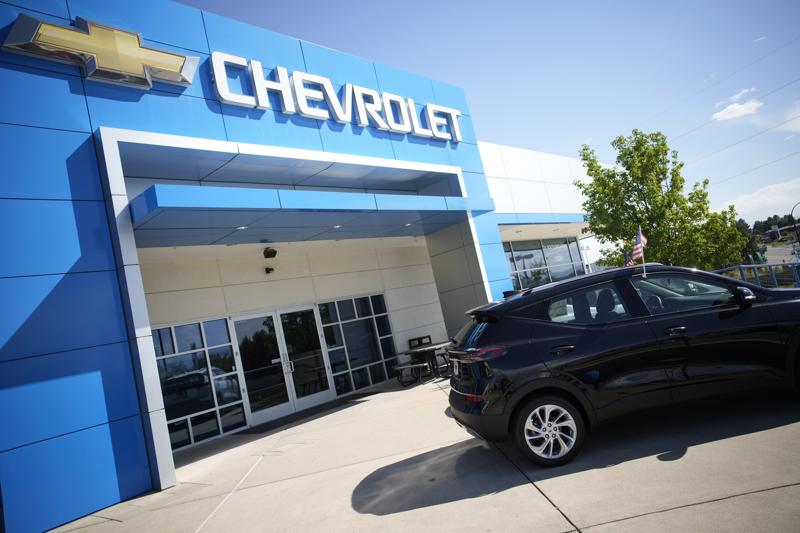
DETROIT (AP) — In a normal month before the pandemic, Con Paulos’ Chevy dealership in Jerome, Idaho, sold around 40 new vehicles. In September, it was only six. Now he’s got nothing new in stock, and every car, truck or SUV on order has been sold.
Last month, what happened at his dealership about 115 miles (185 kilometers) southeast of Boise was repeated across the country as factory closures due to a worsening global shortage of computer chips crimped U.S. new vehicle shipments.
U.S. new vehicle sales tumbled about 26% in September as chip shortages and other parts-supply disruptions cut into the selection on dealer lots and raised prices once again to record levels. That sent many frustrated consumers to the sidelines to wait out a shortage that has hobbled the industry since late last year.
Automakers sold just over 1 million vehicles during the month, according to Edmunds.com, a figure that included estimates for Ford and others that didn’t report numbers Friday. September was the lowest sales month of the year, Edmunds said.
For the third quarter, sales were 3.4 million, down 13% from the same period a year ago.
Automakers on Friday reported some pretty poor numbers. General Motors, which only reports sales by quarter, said its deliveries were off nearly 33% from July through September of last year. Stellantis, formerly Fiat Chrysler, saw quarterly sales dip 19%, while Nissan sales were down 10% for the quarter.
Honda’s U.S. sales fell almost 25% last month, and were down 11% for the quarter. At Toyota, sales were off 22% for September but up just over 1% in the third quarter. Hyundai reported sales off 2% last month but up 4% for the third quarter. Volkswagen third-quarter sales were down 8%.
“September results show that there are simply not enough vehicles available to meet consumer demand,” said Thomas King, president of data and analytics at J.D. Power.
The average sales price of a new vehicle hit a record $42,802 last month, breaking the old record of $41,528 set in August, J.D. Power said. The average U.S. price is up nearly 19% from a year ago, when it broke $36,000 for the first time, J.D. Power said. The auto price increases have helped to drive up U.S. inflation.
General Motors, hit hard by temporary plant closures last quarter, expressed some optimism, though. Steve Carlisle, president of GM North America, said the computer chip shortage is improving.
“As we look to the fourth quarter, a steady flow of vehicles held at plants will continue to be released to dealers, we are restarting production at key crossover and car plants, and we look forward to a more stable operating environment through the fall,” he said in a statement.
The shortage and crazy high prices for both new and used vehicles began with the eruption of the pandemic last year, when many states issued stay-at-home orders. Prices plummeted, and automakers shuttered factories for eight weeks. The resulting decline in supply came just as many cooped-up consumers wanted a new or used vehicle to commute to work or to take road trips without coming in contact with others.
While the auto plants were shut down in April and May last year, computer chip makers shifted production to satisfy wild demand for laptops, gaming devices and tablets. That created a shortage of automotive-grade chips, a problem that might not be fully resolved until next year.
Because of the high prices, dealers big and small are reporting record profits, but Paulos fears those days might be over. He’s paying the bills and making money with used car sales, as well as service as people keep their vehicles longer. He’s hoping the new auto shortage has hit bottom and says GM appears to be bringing more factories back online.
“We won’t be having any inventory to show people here,” Paulos says. “If we don’t get some supply to the dealers, the record profits we were making are going to turn into record losses, I’m afraid. It’s hard to sustain yourself with no new flow.”
- Get link
- X
- Other Apps


Comments
Post a Comment