NASA rover attempting most difficult Martian touchdown yet By MARCIA DUNN yesterday. Click here.
NASA rover attempting most difficult Martian touchdown yet
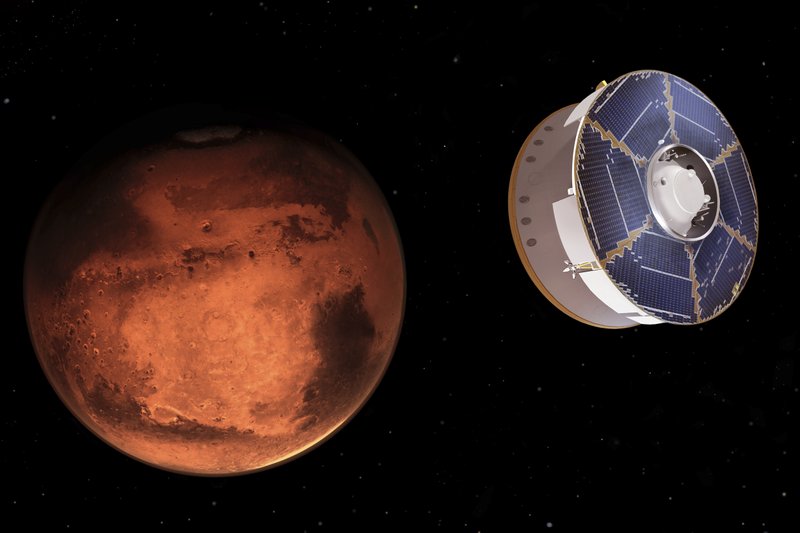
CAPE CANAVERAL, Fla. (AP) — Spacecraft aiming to land on Mars have skipped past the planet, burned up on entry, smashed into the surface, and made it down amid a fierce dust storm only to spit out a single fuzzy gray picture before dying.
Almost 50 years after the first casualty at Mars, NASA is attempting its hardest Martian touchdown yet.
The rover named Perseverance is headed Thursday for a compact 5-mile-by-4-mile (8-kilometer-by-6.4-kilometer) patch on the edge of an ancient river delta. It’s filled with cliffs, pits, sand dunes and fields of rocks, any of which could doom the $3 billion mission. The once submerged terrain also could hold evidence of past life, all the more reason to gather samples at this spot for return to Earth 10 years from now.
While NASA has done everything possible to ensure success, “there’s always this fear that it won’t work well, it won’t go well,” Erisa Stilley, a landing team engineer, said Tuesday. “We’ve had a pretty good run of successful missions recently and you never want to be the next one that isn’t. It’s heartbreaking when it happens.”
A look at NASA’s latest mission:
MARS MASTER
NASA has nailed eight of nine landing attempts, making the U.S. the only country to achieve a successful touchdown. China hopes to become the second nation in late spring with its own life-seeking rover; its vessel entered orbit around Mars last week along with a United Arab Emirates spacecraft. The red planet’s extremely thin atmosphere makes it hard to get down safely. Russia has piled up the most lander losses at Mars and moon Phobos, beginning in the early 1970s. The European Space Agency also has tried and failed. Two NASA landers are still humming along: 2012′s Curiosity rover and 2018′s InSight. Launched last July, Perseverance will set down some 2,000 miles (3,200 kilometers) away at Jezero Crater, descending by parachute, rocket engines and sky crane. The millions of lines of software code and hundreds of thousands of electric parts have to work with precision. “There’s no go-backs. There’s no retries,” deputy project manager Matt Wallace said Wednesday.

TOUGHEST LANDING YET
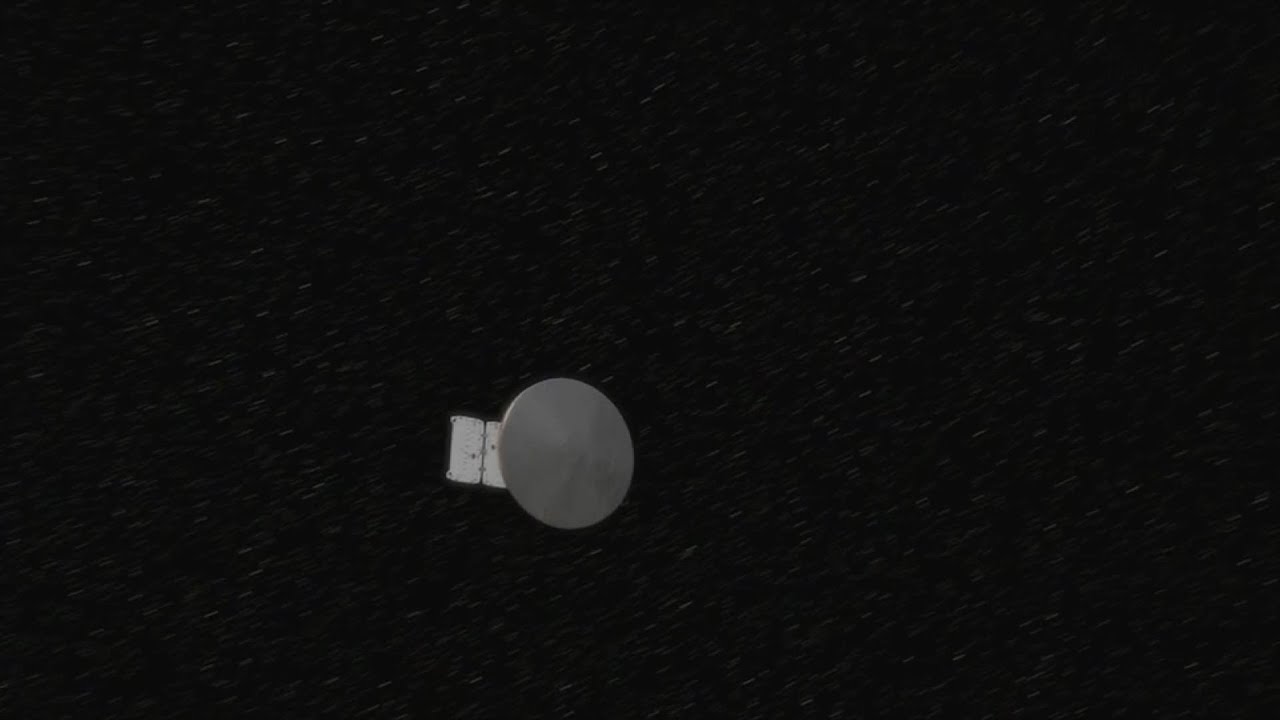
NASA has equipped the 1-ton Perseverance — a beefier version of Curiosity — with the latest landing tech to ace this touchdown. A new autopilot tool will calculate the descending rover’s distance to the targeted location and release the massive parachute at the precise moment. Then another system will scan the surface, comparing observations with on-board maps. The rover could detour up to 2,000 feet (600 meters) while seeking somewhere safe, Neil Armstrong style. Without these gizmos, Jezero Crater would be too risky to attempt. Once down, the six-wheeled Perseverance should be the best driver Mars has ever seen, with more autonomy and range than Curiosity. “Percy’s got a new set of kicks,” explained chief engineer Adam Steltzner, “and she is ready for trouble on this Martian surface with her new wheels.”
LOOKING FOR SIGNS OF LIFE
Where there was water, there may have been life. That’s why NASA wants Perseverance snooping around Jezero Crater, once home to a lake fed by a river. It’s now bone dry, but 3.5 billion years ago, this Martian lake was as big and wet as Nevada and California’s Lake Tahoe. Perseverance will shoot lasers at rocks judged most likely to contain evidence of past microscopic life, analyzing the emitted vapor, and drill into the best candidates. A few dozen core samples — about a pound’s worth (one-half kilogram) of rock and dust — will be set aside in sealed titanium tubes for future pickup.
ROUND-TRIP TICKET
Scientists have wanted to get hold of Mars rocks ever since NASA’s Mariners provided the first close pictures a half-century ago. NASA is teaming up with the European Space Agency to do just that. The bold plan calls for a rover and return rocket to launch to Mars in 2026, to retrieve Perseverance’s stash of samples. NASA expects to bring back the rocks as early as 2031, several years before the first astronauts might arrive on the scene. The rover’s super sterilized sample tubes are the cleanest components ever sent into space, according to NASA, to avoid any contaminating traces of Earth.
COVID-19 PRECAUTIONS
Speaking of clean, NASA’s Mars Mission Control has never been so spotless. Instead of passing around jars of peanuts right before Perseverance’s landing — a good luck tradition going back decades — masked flight controllers will get their own individual bags. It’s one of many COVID-19 precautions at California’s Jet Propulsion Laboratory. The landing team will be spread over multiple rooms, with NASA bigwigs and journalists watching remotely. Launched last July, the aptly named Perseverance bears a plaque honoring health care workers battling the virus over the past year.
___
The Associated Press Health and Science Department receives support from the Howard Hughes Medical Institute’s Department of Science Education. The AP is solely responsible for all content.
- Get link
- X
- Other Apps


Comments
Post a Comment